DEMENTIA CAREGIVER
A dementia caregiver's guide to keeping everyone on the same page
Caring for someone with dementia is a long road, and it's rarely walked alone. A spouse handles the days, a daughter handles the doctors, a son pays the bills, and paid caregivers cover the hours nobody else can. Keeping all of them informed is a job in itself.
The Alzheimer's Association reports that more than 7 million Americans are living with Alzheimer's, the most common cause of dementia, and nearly 13 million Americans provide unpaid care for someone with Alzheimer's or another dementia. Here's how a dementia caregiver can organize that care, and where Shark Team helps. It's general information: talk to their doctor about the care plan.
Write the daily routine down
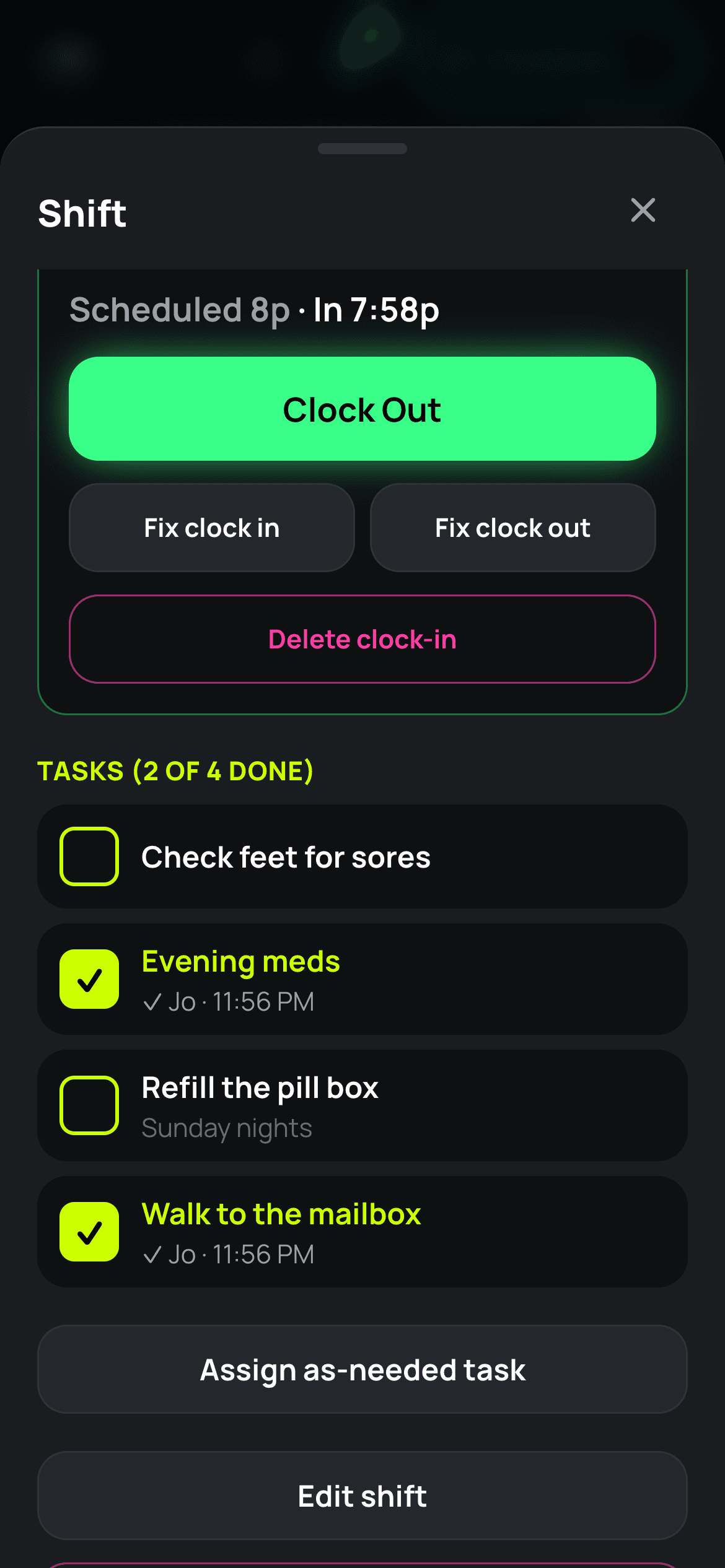
Many dementia caregivers find that a steady daily routine makes days calmer. Write the routine down so every helper follows the same one: when meals happen, which meds come with breakfast, what helps when they're upset, and what to avoid.
In Shark Team, give every shift a task list, like “Morning meds with breakfast” or “Walk after lunch,” and each caregiver checks things off as they go. Unfinished tasks are flagged at clock-out. See care tasks and our caregiver daily checklist.
Medications: who gave what, and when
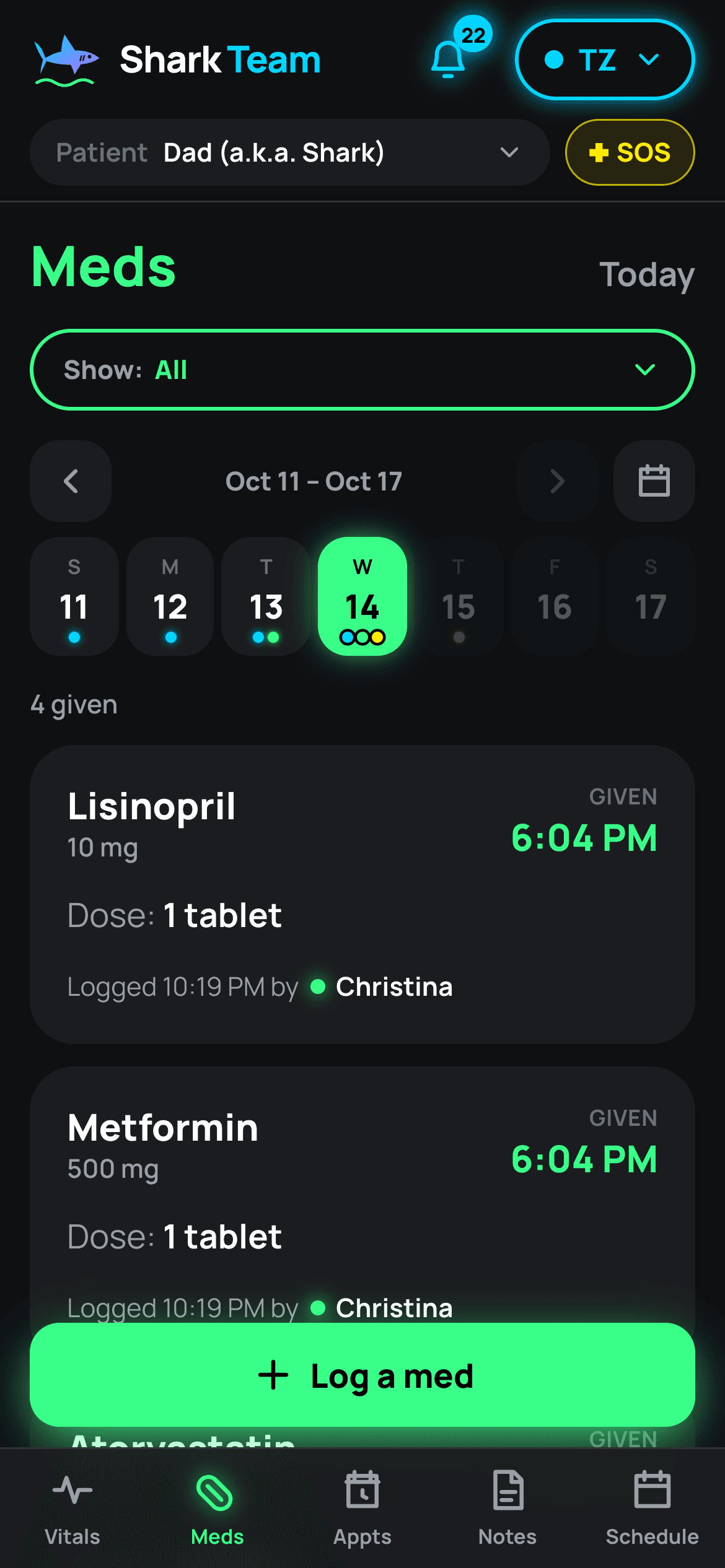
Someone living with dementia may not remember whether they took a pill, and may say they did when they didn't. A shared dose log ends the guessing. Each dose is logged as given, refused or skipped, with the time and the name of the person who gave it, and reminders go out at the times you set.
If a dose is refused, log it as refused so the next person and the doctor can see the pattern. More on the medication tracker.
- Given, refused or skipped, with who and when
- Reminders at the times you choose
- A warning if an as-needed dose is too soon
Appointments, and what to tell the doctor
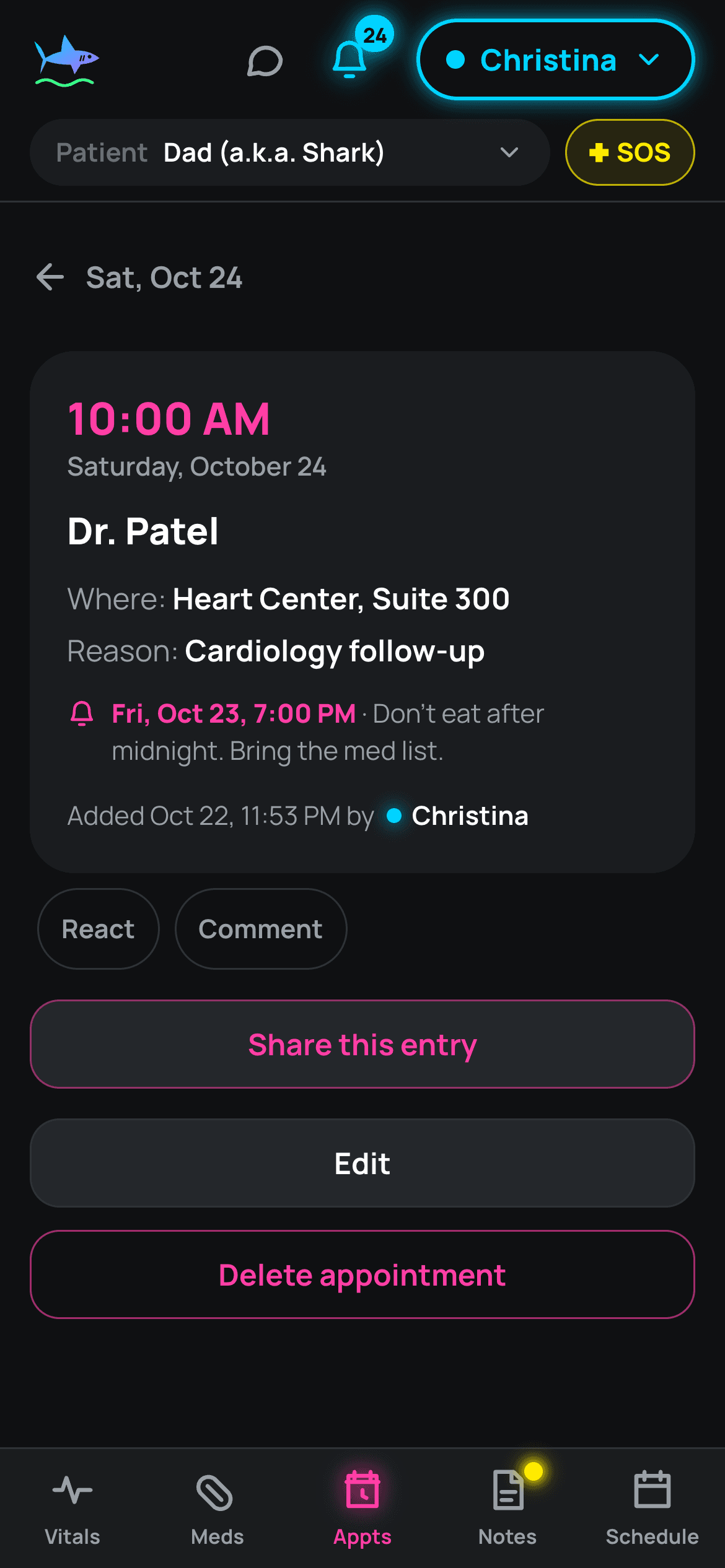
Visits with the primary care doctor, a neurologist or a memory clinic go better when you bring specifics: what changed, when it started and how often it happens. Add appointments with reminders the day before and 2 hours out, and a custom reminder like “Bring the list of new behaviors.”
Our doctor appointment checklist covers what to bring and what to ask.
Daily notes the whole family can see
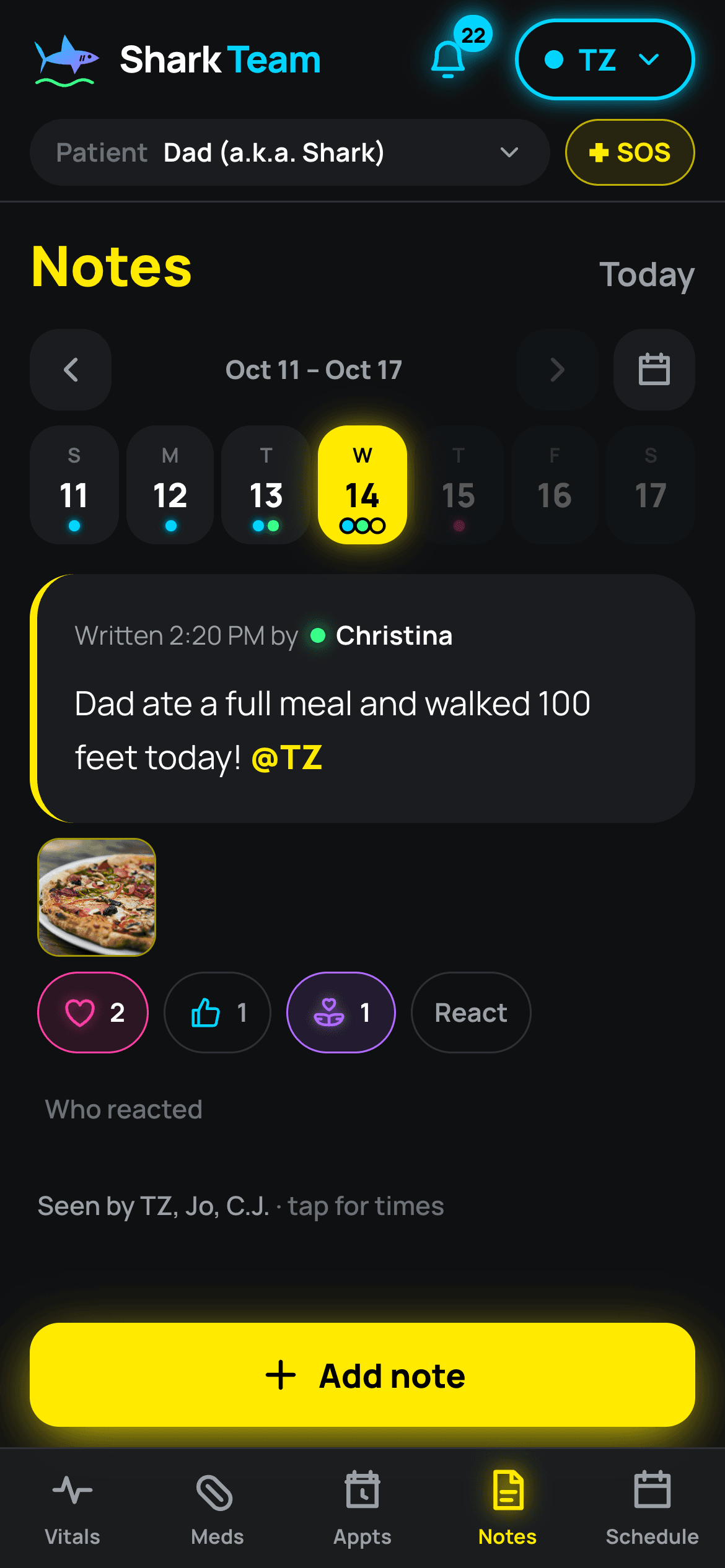
Changes in sleep, appetite, mood or memory are easy to miss when you only see someone once a week. Post a quick note after a visit or a shift, with a photo or video if you like, and @mention the people who need to know. Over weeks, those notes become a record you can share with the doctor.
Family who only need to stay informed can join as Viewers: they see the records, without changing anything. See family care coordination.
- Notes with photos, videos and @mentions
- Viewers can see, not change
- A record of changes for the doctor
Caregivers, shifts and safety
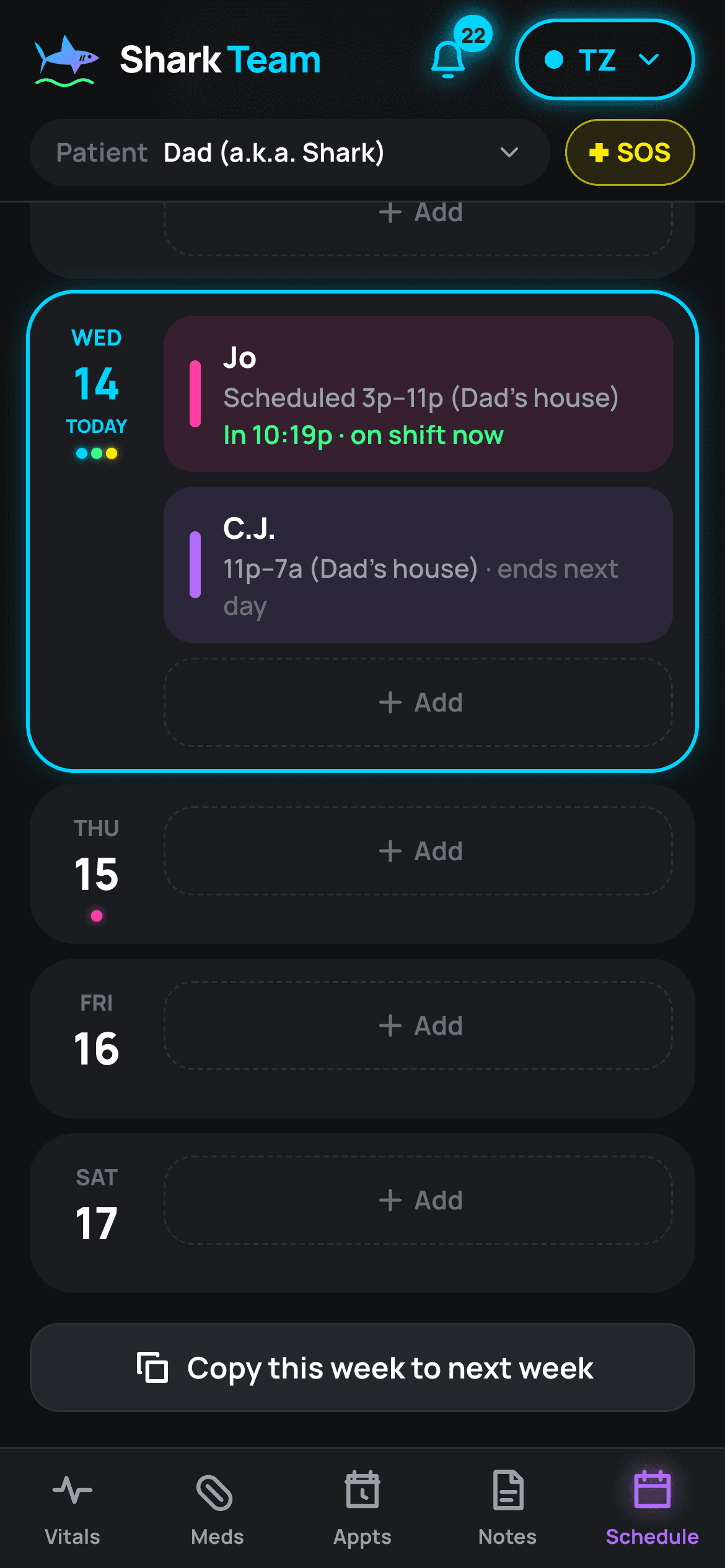
As care needs grow, many families bring in paid caregivers. The caregiver schedule shows who's on and when, with GPS clock-in and a handoff at the end of each shift, so the next person knows how the day went.
The Alzheimer's Association says six in 10 people living with dementia will wander at least once. Keep a recent photo handy, and keep the emergency medical card current with their conditions, meds and contacts. Caring for someone with dementia is hard: the Alzheimer's Association's 24/7 Helpline is 800-272-3900.
Who this guide is for
Spouses and partners
Usually doing the most. Share the load, and the information.
Adult children
Know what's happening day to day, even from far away.
Paid caregivers
Follow the same routine, and hand off clearly at the end of a shift.
Long-distance family
See the notes and the schedule without a phone tree.
Sources and further reading
- Alzheimer's Association: Facts and Figures: how many people live with Alzheimer's, and how many care for them
- Alzheimer's Association: Wandering: how common wandering is, and how to plan for it
- NIH (National Institute on Aging): Alzheimer's caregiving: daily care, safety and support for caregivers
Private by design
Each patient's information is shared only with the people you invite, and each role sees only what it should. We never sell your data, there are no ads, and there's no tracking. Lock-screen notifications never show readings or message text. Read our privacy policy.
Not medical advice
Shark Team helps you keep good records and share them. It doesn't give medical advice, diagnose anything or replace your doctor, nurse or pharmacist. In an emergency, call 911.
Dementia caregiver questions
Does Shark Team give dementia care advice?
No. Shark Team helps you keep records and share them with the people who help. Talk to their doctor about care decisions, and call 911 in an emergency.
Can a person living with dementia use the app?
Usually a family member manages it. If it helps, you can invite them as a Viewer, which lets them see without changing anything.
Can family far away stay informed?
Yes. Invite them as Viewers or Admins. They see meds, appointments and notes as they happen, from anywhere.
Where can caregivers get support?
The Alzheimer's Association's 24/7 Helpline is 800-272-3900. The National Institute on Aging also has free caregiving guides.
Is it free?
Early access is free.
Get your family's care on the same page.
Early access is free. We'll set you up personally.