STROKE CAREGIVER OVERVIEW
A stroke caregiver's guide to staying organized
Shark Team exists because of a stroke. Our dad had his first one in 2018, and overnight our family had new medications to give, therapy and doctor appointments to keep, blood pressure to watch and caregivers to schedule. For years we held it together with group texts and a shared calendar.
If someone you love is recovering from a stroke, here's the short version of what helped us stay organized as stroke caregivers, and where Shark Team can carry some of the load. Each section links to a detailed guide in our stroke hub. It's general information: always follow the plan from their doctors and therapists.
The first weeks home after a stroke
Coming home from the hospital or a rehab facility is a big change. There's usually a discharge plan with new medicines, follow-up visits and often physical, occupational or speech therapy. Put all of it in one place on day one, before the papers get scattered across the kitchen counter. Our guide to caring for someone at home after a stroke walks through the first weeks, the daily routine and who does what.
According to the CDC, more than 795,000 people in the United States have a stroke every year, and nearly 1 in 4 of those strokes happen in people who have had one before. That's one reason doctors pay so much attention to blood pressure and to taking medicines exactly as prescribed after a stroke. Ask the care team what they want you to watch at home, and write it down.
Coming home from a hospital stay for any reason? Our page on recovering after a hospital stay walks through the discharge plan step by step.
- Keep the discharge papers and med list together
- Ask which readings to take, and how often
- Put every follow-up and therapy visit on one calendar
Track the vitals the doctor asks for
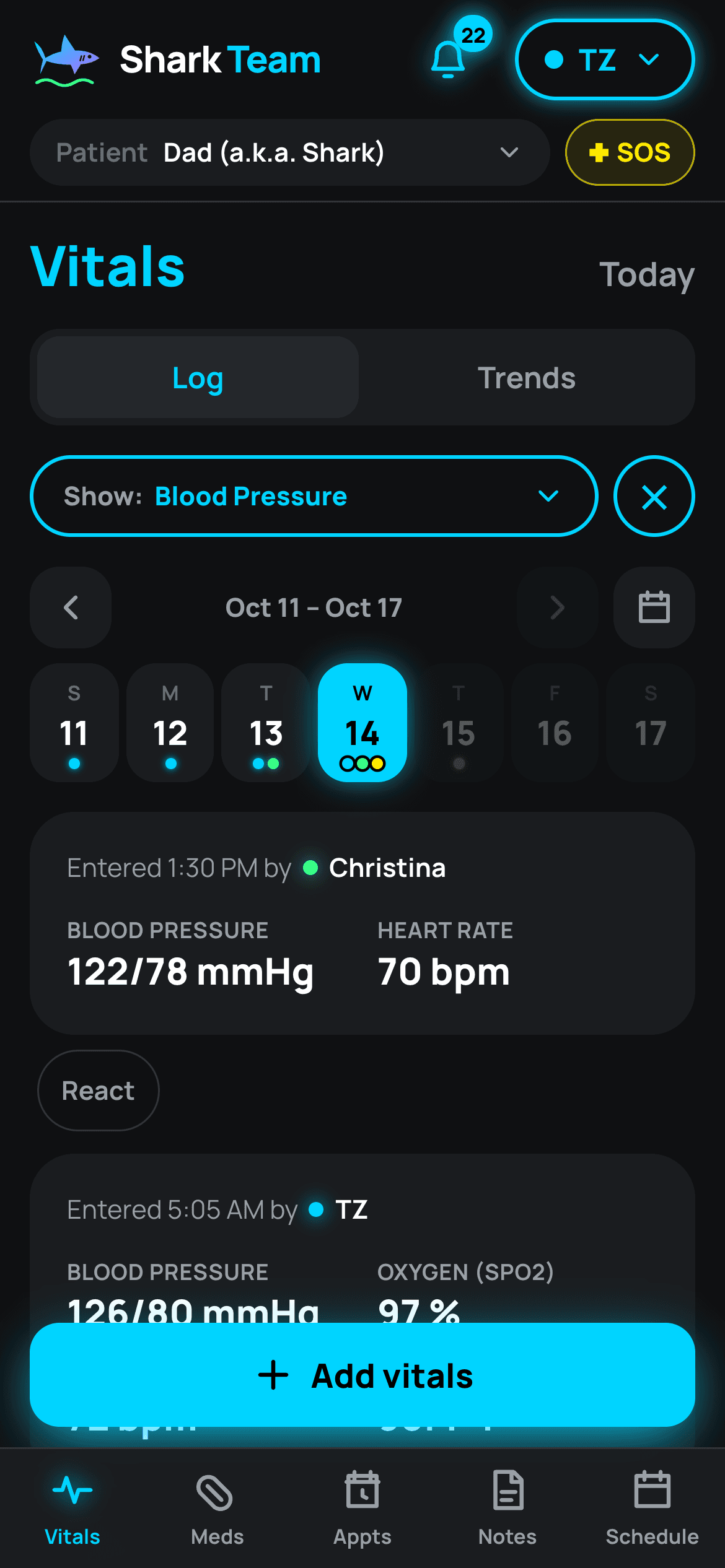
Many stroke survivors are asked to check their blood pressure at home. In Shark Team's Vitals tab, anyone on the team can log a reading with the date, time and who took it. Filter to blood pressure to see every reading at once, set an alert for numbers outside the range the doctor gives you, and export a PDF before each visit.
You can add your own things to track too, like weight, a pain score or minutes of walking practice. See everything the vitals tracker can do, and our guide to tracking blood pressure at home after a stroke.
- Every reading with who took it and when
- Optional alerts outside the doctor's range
- A clean PDF for the next appointment
Medications, given on time and logged
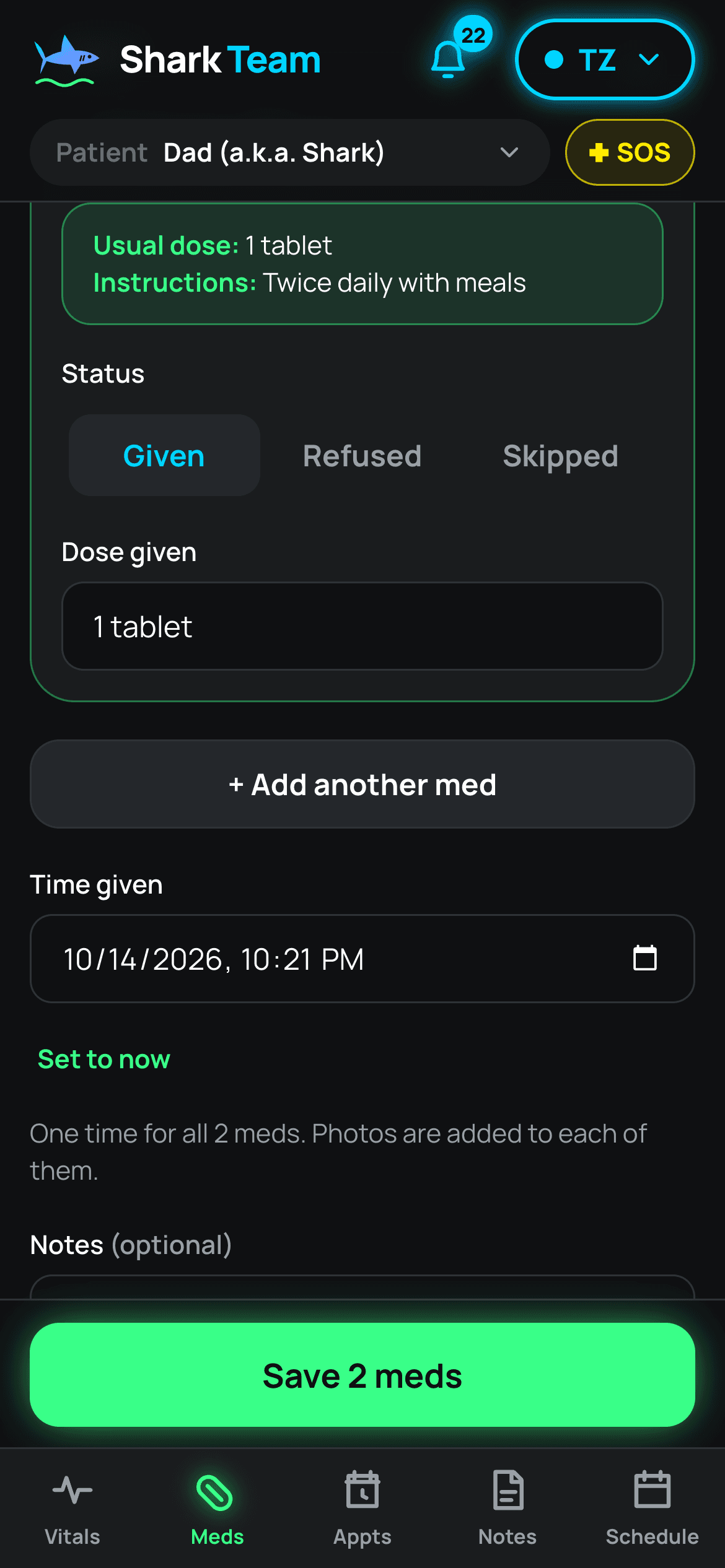
After a stroke, the med list often grows: blood thinners, blood pressure and cholesterol medicines, and more. When several people help, the hardest question is “Did Dad get his evening meds?” In Shark Team each dose is logged as given, refused or skipped, with the time and the name of the person who gave it, and reminders go out at the times you set.
Never change or stop a medicine without talking to the doctor or pharmacist. Shark Team keeps the record; the care team makes the decisions. More on the medication tracker.
Therapy and doctor appointments, with reminders
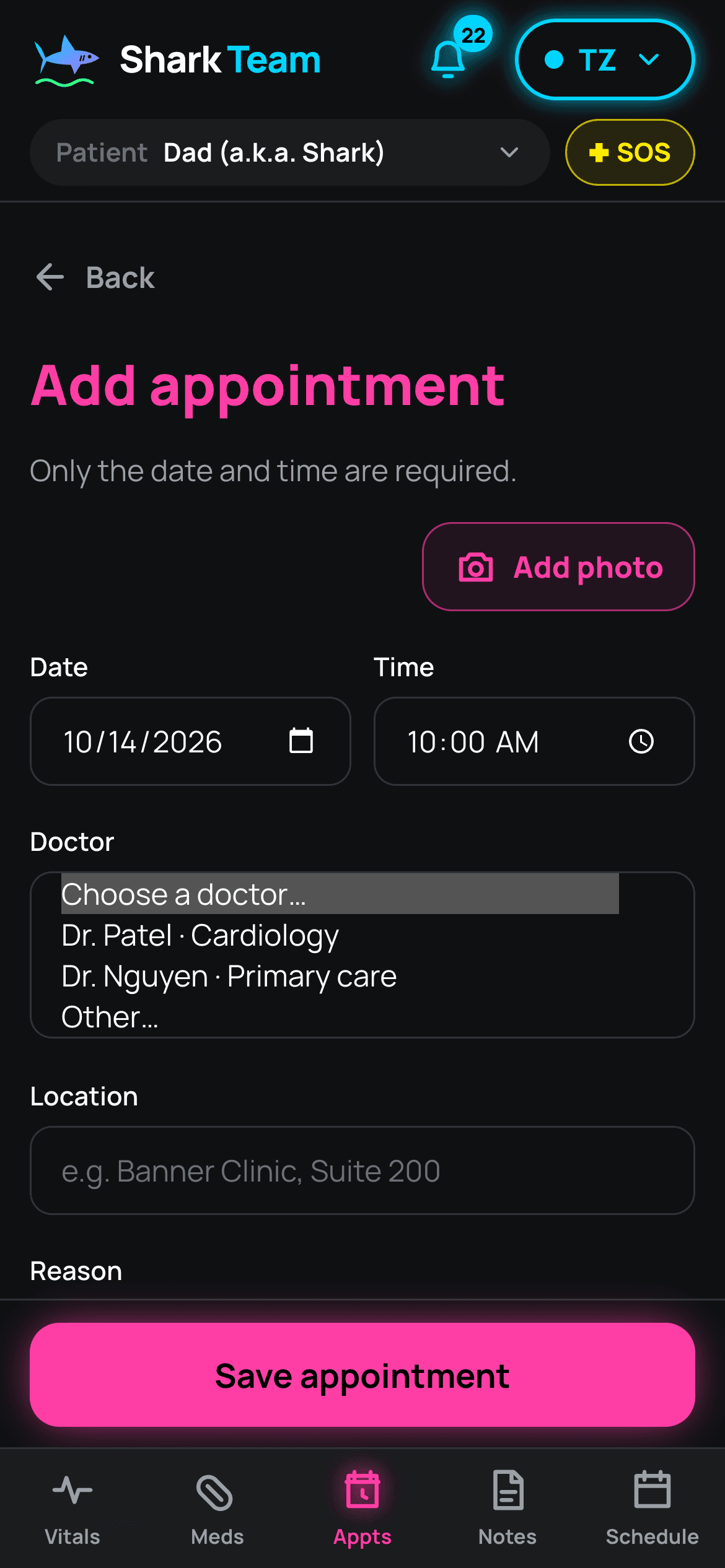
Rehab can mean several visits a week, on top of the neurologist, the primary care doctor and often a cardiologist. Save each doctor once, add appointments in a few taps, and the Account Holder, the Admins and whoever is going along get a reminder the day before and 2 hours out. Snap a photo of the visit papers so whoever goes next knows what was said.
Our guide to physical, occupational and speech therapy explains what each therapist works on.
Notes, caregivers and the warning signs
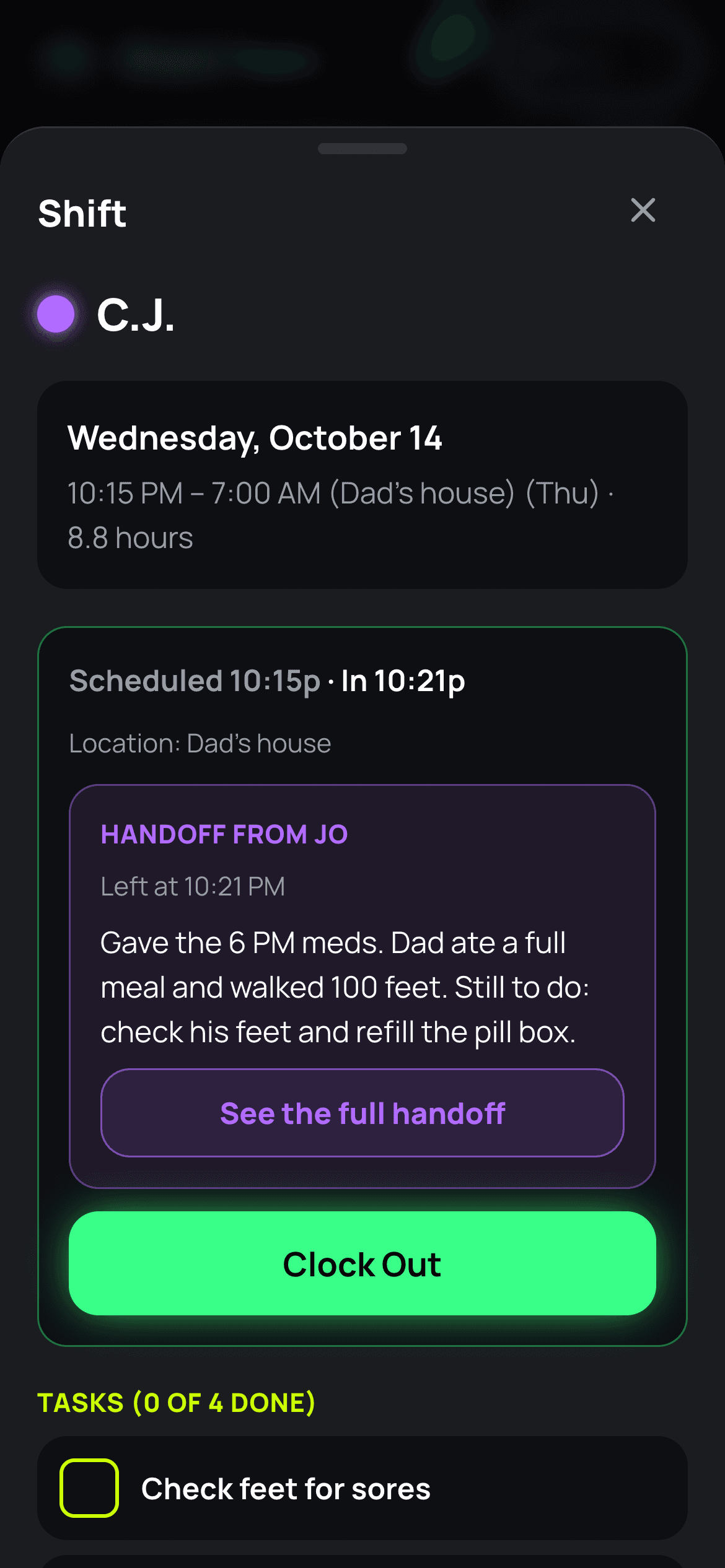
Recovery happens in small steps, and the family wants to hear about them. Post a note with a photo or video when Dad walks to the mailbox, and @mention a sibling who lives far away. If caregivers help, give each shift a task list and a handoff, so the next person knows how the day went. See the caregiver schedule.
Learn the warning signs of another stroke. The American Stroke Association uses B.E. F.A.S.T.: sudden loss of Balance, Eye changes, Face drooping, Arm weakness, Speech difficulty, Time to call 911. Keep the emergency medical card up to date, so you can hand it to the paramedics.
There's more in the hub: aphasia communication tips, fall prevention and caregiver stress and support.
- Notes with photos, videos and @mentions
- Shifts, tasks and handoffs for caregivers
- An emergency card ready for the paramedics
Who this guide is for
Spouses and partners
Suddenly the nurse, the scheduler and the driver. One place helps.
Adult children
Stay in the loop on recovery, from nearby or across the country.
Paid caregivers
Know the routine, the meds and what happened on the last shift.
Stroke survivors
Track your own recovery, and share it with family if you want.
Sources and further reading
- CDC: Stroke Facts: how many people have a stroke each year, and repeat strokes
- American Stroke Association: Stroke Symptoms: the B.E. F.A.S.T. warning signs
- NIH (NINDS): Know Stroke: stroke, treatment and recovery
Private by design
Each patient's information is shared only with the people you invite, and each role sees only what it should. We never sell your data, there are no ads, and there's no tracking. Lock-screen notifications never show readings or message text. Read our privacy policy.
Not medical advice
Shark Team helps you keep good records and share them. It doesn't give medical advice, diagnose anything or replace your doctor, nurse or pharmacist. In an emergency, call 911.
Stroke caregiver questions
Does Shark Team give stroke care advice?
No. Shark Team helps you keep good records and share them. Follow the plan from the doctors, nurses and therapists, and talk to your doctor about any questions.
What are the warning signs of a stroke?
The American Stroke Association uses B.E. F.A.S.T.: sudden loss of Balance, Eye (vision) changes, Face drooping, Arm weakness, Speech difficulty, Time to call 911. If you see any of these signs, call 911 right away.
Can several family members use it?
Yes. Invite family as Admins, Caregivers or Viewers. Each role sees what it should, and everyone works from the same record.
Can the stroke survivor use it too?
Yes. Many people track their own blood pressure and meds, then invite family to see it. You can change who sees what at any time.
Is it free?
Early access is free.
Get your family's care on the same page.
Early access is free. We'll set you up personally.