APHASIA AFTER A STROKE
Aphasia communication tips for families
By TZ Alwan, founder of Shark Team · Published · Last updated
Aphasia can be one of the hardest changes after a stroke, for the survivor and for everyone who loves them. A person who used to tell the best stories may struggle to find a single word, or nod along without understanding. The good news is that families can learn ways to make conversations easier. These tips come from the American Stroke Association and from our own kitchen table.
Think someone is having a stroke right now? Call 911. Don't drive them to the hospital yourself.
What aphasia is
The American Stroke Association describes aphasia as a language disorder that affects a person's ability to communicate. It's most often caused by a stroke in the left side of the brain, where speech and language are handled. It can affect:
- Speaking, or getting the words out.
- Finding the right word, or saying a different word than they meant.
- Understanding what others say, especially long or fast sentences.
- Reading, writing and numbers.
Most important: aphasia doesn't affect intelligence. The person is still themselves, with their own opinions, memories and sense of humor. They just have a harder time getting language in and out. Many people with aphasia feel frustrated or isolated, so patience matters as much as any technique.
One important difference: new or sudden trouble speaking or understanding is a stroke warning sign. The CDC lists it with the other signs, so call 911. Learn the BE FAST signs.
Aphasia is different from slurred speech caused by weak muscles, though some people have both. A speech-language pathologist can tell you which is which, and what to practice. Our guide to stroke rehab explains what speech therapy covers.
Tips for talking with someone who has aphasia
The American Stroke Association and the National Aphasia Association suggest:
- Keep it simple. Short, simple sentences. One idea at a time.
- Be patient. Give plenty of time to answer. Don't finish their sentences unless they want you to.
- Talk with them, not for them. Include them in conversations, and don't talk about them as if they aren't there.
- Remove distractions. Turn off the TV or radio, and face them when you talk.
- Be creative. Writing, gestures, pointing, drawing and photos on a phone or tablet can all help.
- Confirm. Repeat back what you think they said or meant: “You want to call Mary, right?”
- Don't shout. Hearing is usually fine, so speaking loudly doesn't help.
Make questions easier to answer
Some questions are much easier than others when words are hard to find:
- Ask yes-or-no questions: “Are you hungry?” instead of “What do you want to eat?”
- Offer choices you can point to: hold up two shirts, or show two photos.
- Use a simple picture board for common needs: water, bathroom, pain, tired, TV, phone.
- Write key words in large letters while you talk, like the time of the next appointment.
Tips for the person with aphasia
The same American Stroke Association guide has tips for survivors, which family can encourage:
- It's OK to say “I have aphasia” and ask people to slow down.
- Take your time. It may take a while to get the words out.
- Try a different way when stuck: drawing, gestures, or pointing to pictures.
- Let people know what works best for you.
- Carry photos, a notepad or a phone with helpful pictures.
The American Stroke Association also offers a printable aphasia ID card that explains aphasia to people out in the community, like a cashier or a new doctor.
Help everyone use the same approach
When several family members and caregivers help, it's easy for each person to do things differently. Write down what works: the yes-or-no questions he answers best, the gestures he uses for “bathroom” or “tired,” the times of day he talks most easily. Share it with everyone, and update it as the speech therapist adds new strategies.
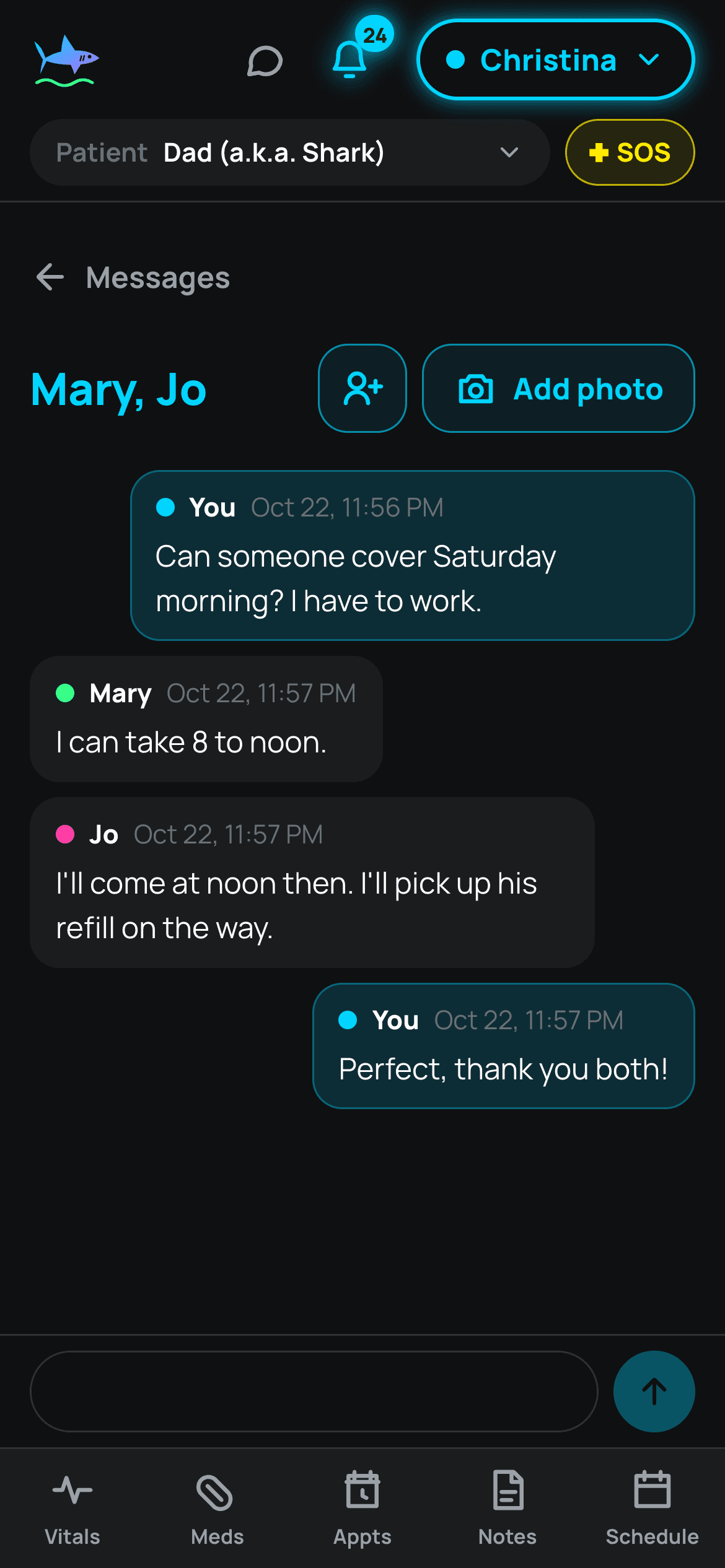
In Shark Team, a note the whole team can see keeps everyone on the same page, and family care coordination keeps those updates in one place instead of buried in group texts. Shift handoffs on the caregiver schedule let a paid caregiver pass along what worked today.
Taking care of yourself
Conversations that used to be easy can now be tiring and sad. It's normal to grieve the old way of talking, for both of you. Celebrate small wins, take breaks, and look for support from other families living with aphasia. Our guide to caregiver stress and support lists places to start.
Questions families ask
Does aphasia affect intelligence?
No. The American Stroke Association says aphasia doesn't affect intelligence. People with aphasia remain mentally alert, even when their speech is jumbled or hard to understand.
Should I speak louder to someone with aphasia?
Usually not. The American Stroke Association notes that hearing is usually fine, so speaking loudly doesn't help. Speak in short, simple sentences and give them time.
Can aphasia get better?
Many people improve, especially with speech-language therapy, but every stroke is different. Ask the speech-language pathologist what to expect and what to practice at home.
What should I do if we both get stuck?
Pause, recap what you understood so far, and try another way: writing, pointing, gestures, drawing or pictures. It's fine to come back to it later.
Sources
- American Stroke Association: Aphasia and Stroke: what aphasia is and how it affects people
- American Stroke Association: Communicating Through Barriers: tips for people with aphasia and the people they talk with
- American Stroke Association: Effects of Aphasia: trouble speaking, understanding, reading and writing
- CDC: Signs and Symptoms of Stroke: sudden trouble speaking or understanding as a stroke warning sign
- NIH (NINDS): Glossary of Neurological Terms: aphasia and related terms
This is general information, not medical advice. Every stroke and every recovery is different. Talk to the doctor, nurse or therapist about your situation, and call 911 in an emergency.