STROKE CAREGIVER SUPPORT
Stroke caregiver burnout, stress and mood changes
By TZ Alwan, founder of Shark Team · Published · Last updated
A stroke changes life for the whole family. The survivor is working hard to recover, and the people caring for them are often doing it on little sleep, on top of jobs and kids. Stress, sadness and burnout are common on both sides. This guide covers the signs to watch for, in the caregiver and in the survivor, and where to find support.
Think someone is having a stroke right now? Call 911. Don't drive them to the hospital yourself.
Why stroke caregiving is so hard
Stroke caregiving often starts overnight, with no time to prepare. Suddenly there are new medicines, therapy visits, insurance calls and safety worries, and the person you're caring for may be changed in ways that are hard to watch. The American Stroke Association reminds caregivers that they provide the most important long-term support for a survivor's recovery, and that caregivers need care too.
Signs of caregiver burnout
Burnout builds slowly. NIH's National Institute on Aging lists these signs of caregiver stress:
- Feeling exhausted, overwhelmed or anxious.
- Becoming easily angered or impatient.
- Feeling lonely or cut off from others.
- Trouble sleeping, or not getting enough sleep.
- Feeling sad or hopeless, or losing interest in things you used to enjoy.
- Frequent headaches, pain or other physical problems.
- No time to exercise, eat well or take care of yourself.
- Misusing alcohol or drugs, including prescription medicines.
If you notice these signs, tell your own doctor that you're a caregiver. The CDC suggests making sure your doctor knows, so they can help you look after your own health.
Mood changes in the stroke survivor
The American Stroke Association explains that a stroke affects the brain, and the brain controls emotions and behavior. Survivors may feel irritable, fearful, frustrated, angry, sad or anxious, and they may be more forgetful or easily confused. Some people have sudden crying or laughing that doesn't match how they feel.
Depression is especially common. The American Stroke Association says as many as 30 to 50 percent of stroke survivors are depressed at some point after a stroke. Signs can include:
- A sad, anxious or “empty” mood that doesn't lift.
- Losing interest in activities, including therapy.
- Low energy, and trouble concentrating or making decisions.
- Changes in sleep and appetite.
- Feelings of hopelessness or worthlessness, or thoughts of death.
Tell the doctor about any of these. The American Stroke Association notes that treating depression and anxiety doesn't just improve mood: it can help physical and thinking recovery too. If anyone talks about suicide or harming themselves, get help right away: call or text 988, or call 911.
Mood changes can also make communication harder. If the survivor has trouble speaking or understanding, our aphasia communication tips may help.
Practical ways to lighten the load
- Ask for specific help. The CDC suggests choosing a task or a block of time you'd like help with. “Can you drive Dad to therapy on Thursdays?” works better than “Let me know if you need anything.”
- Share the schedule. The CDC also suggests a shared calendar where people sign up for regular help.
- Take real breaks. Respite care can come from family and friends, nonprofit groups or government agencies, at home, at an adult day program or for a short stay in a care facility. The CDC notes that even a few hours of respite a week can improve your well-being.
- Look after the basics. The American Stroke Association reminds caregivers to eat well, exercise and get enough rest.
- Let go of perfect. Some days the goal is just the meds, the meals and everyone safe.
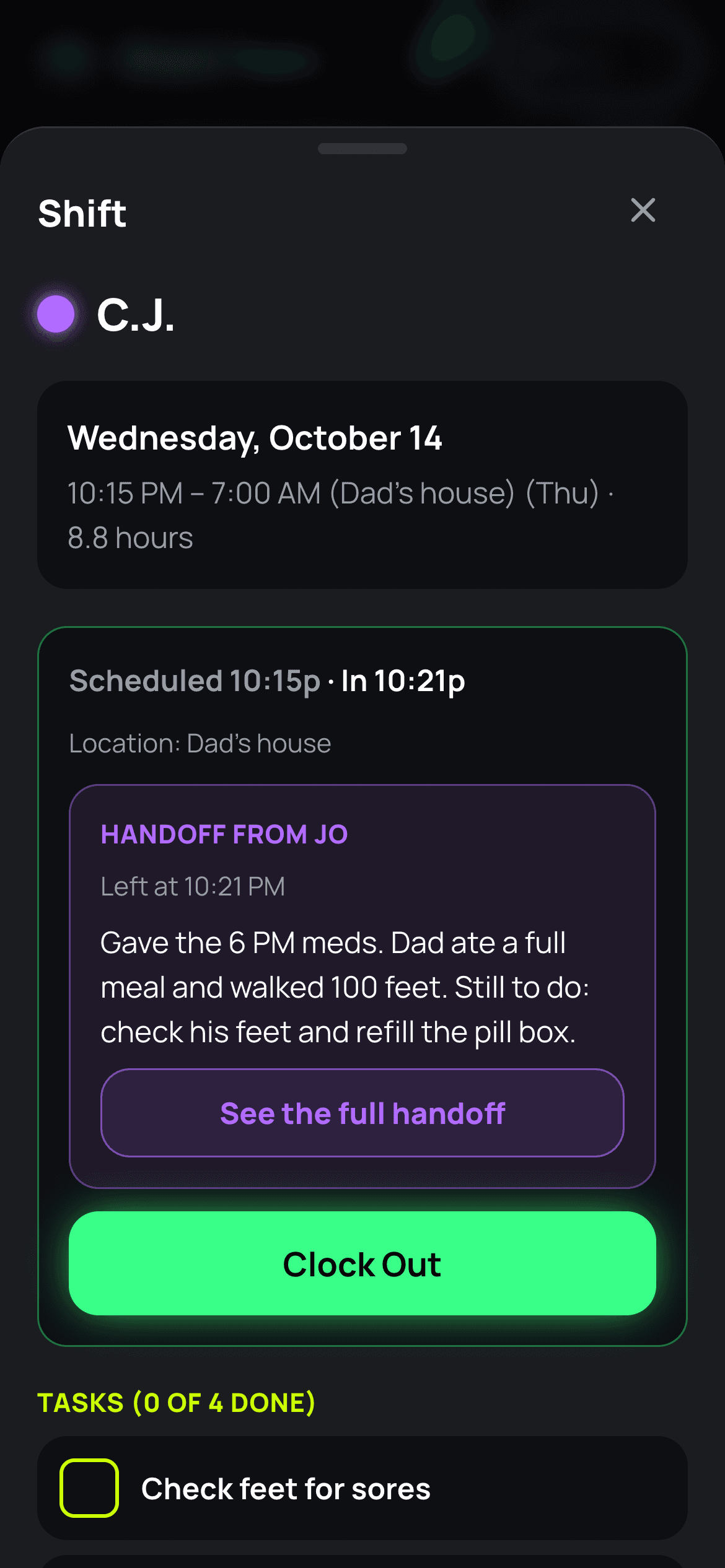
In Shark Team, the caregiver schedule spreads shifts across family and paid caregivers, with a handoff at the end of each shift so nobody has to keep it all in their head. Family care coordination lets siblings far away see updates and pick up jobs like refill calls and bills.
Where to find support
- Stroke Family Warmline: the American Stroke Association's line for survivors, families and caregivers, 1-888-4-STROKE (1-888-478-7653), 8:30 a.m. to 5 p.m. Central, Monday to Friday.
- Stroke support groups: the American Stroke Association has a support group finder, and many hospitals and rehab centers run groups for survivors and caregivers.
- The care team: the hospital social worker or case manager can point you to local caregiver programs and respite options.
- Your own doctor: for your sleep, stress and mood.
- In a crisis: call or text 988 (Suicide & Crisis Lifeline), or call 911.
Recovery is a long road, and you don't have to walk it alone. When you're ready, our guide to caring for someone at home after a stroke has more on dividing the work.
Questions families ask
Is depression common after a stroke?
Yes. The American Stroke Association says as many as 30 to 50 percent of stroke survivors have depression in the early or later phases after a stroke, and that treatment can help recovery. Talk to the doctor about any signs.
What are signs of caregiver burnout?
NIH's National Institute on Aging lists feeling exhausted, overwhelmed or anxious, getting angry easily, feeling lonely, trouble sleeping, feeling sad or hopeless, and frequent headaches or pain. Talk to your own doctor if you notice them.
Where can stroke caregivers find support?
The American Stroke Association has a Stroke Family Warmline (1-888-4-STROKE) and a support group finder. Local hospitals, rehab centers and area agencies on aging often have caregiver programs and respite care.
What if someone is thinking about suicide or self-harm?
Get help right away. In the U.S., call or text 988 to reach the Suicide & Crisis Lifeline, or call 911 in an emergency.
Sources
- American Stroke Association: Family Caregivers: caregiver support, support groups and the Stroke Family Warmline
- American Stroke Association: Depression and Stroke: signs of depression in stroke survivors, and why treatment matters
- American Stroke Association: 15 Things Caregivers Should Know: post-stroke depression and caregiver self-care
- CDC: Caring for Yourself When Caring for Another: respite care and getting help from family and friends
- NIH (National Institute on Aging): Taking Care of Yourself: signs of caregiver stress and asking for help
This is general information, not medical advice. Every stroke and every recovery is different. Talk to the doctor, nurse or therapist about your situation, and call 911 in an emergency.