BLOOD PRESSURE AFTER A STROKE
Tracking blood pressure at home after a stroke
By TZ Alwan, founder of Shark Team · Published · Last updated
After our dad's first stroke, blood pressure became the number everyone asked about. Doctors often want readings taken at home between visits, and when several people take them, a clear log matters. Here's why blood pressure gets so much attention after a stroke, how to take a good reading, and how to bring the numbers to the doctor.
Think someone is having a stroke right now? Call 911. Don't drive them to the hospital yourself.
Why blood pressure matters so much after a stroke
The American Stroke Association calls high blood pressure the leading risk factor for stroke, and points out that it's something that can be controlled with the right care. High blood pressure usually has no symptoms, so the only way to know is to measure it.
It matters even more after a first stroke. According to the CDC, nearly 1 in 4 strokes happen in people who have already had one. That's why the care team often adjusts blood pressure medicines in the months after a stroke, and why they may ask for home readings to see how the changes are working.
Your doctor will set the target for your family member. Targets after a stroke can differ from the general numbers below, so always go by the care team's plan.
How to take an accurate reading at home
The American Heart Association recommends these steps. Small details really do change the numbers:
- No caffeine, exercise or smoking for 30 minutes before. Use the bathroom first.
- Sit in a chair with the back supported and feet flat on the floor. Rest quietly for at least 5 minutes.
- Rest the arm on a table so the middle of the cuff is at heart level. Prop it on a pillow if needed.
- Put the cuff on bare skin on the upper arm, just above the bend of the elbow. Not over a sleeve.
- No talking or phone during the reading.
- Take two readings, one minute apart, and write down both.
- Measure at the same times every day.
After a stroke: a few extra things to ask about
If one arm is weak or has lost feeling, ask the care team which arm to use and stick with it. If the survivor gets dizzy when they stand, write that down too, and ask the doctor whether readings should also be taken standing. Help them sit safely, and stay close if their balance is affected.
Choosing a monitor
The American Heart Association recommends an automatic monitor with a cuff that goes on the upper arm, validated for accuracy (the list at validatebp.org can help). Wrist and finger monitors give less reliable readings. Make sure the cuff fits, and bring the monitor to the next appointment so the office can check it against theirs.
What the numbers mean, in general
These are the American Heart Association's general categories for adults. They're not targets for any one person:
- Normal: less than 120 on top and less than 80 on the bottom.
- Elevated: 120 to 129 on top and less than 80 on the bottom.
- Stage 1 high blood pressure: 130 to 139 on top, or 80 to 89 on the bottom.
- Stage 2 high blood pressure: 140 or higher on top, or 90 or higher on the bottom.
- Severe: higher than 180 on top and/or higher than 120 on the bottom. With symptoms like chest pain, shortness of breath, back pain, numbness, weakness, vision changes or trouble speaking, call 911. Without symptoms, call the doctor.
Remember that numbness, weakness, vision changes and trouble speaking can also be stroke signs. If they come on suddenly, call 911. Learn the BE FAST signs.
How to log blood pressure readings
For each reading, write down:
- The date and time.
- Both numbers (like 128/82) and the pulse.
- Which arm, and whether they were sitting or standing.
- Who took it.
- A short note: “before morning meds,” “dizzy after standing,” “missed last night's dose.”
Paper works: our free blood pressure log prints a clean sheet, and our guide to keeping a blood pressure log at home goes into more detail.
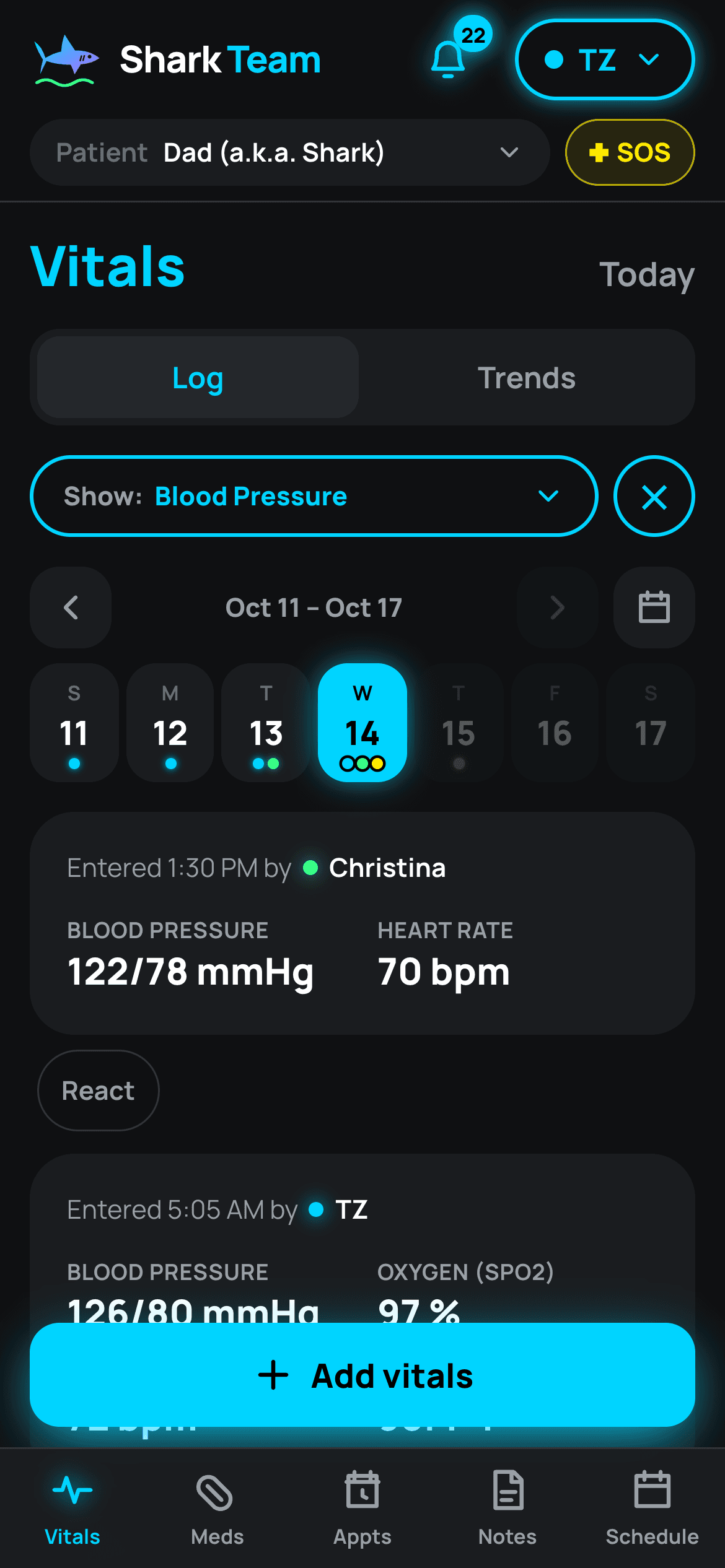
When several people take readings, a shared log is easier. In the Shark Team vitals tracker, each reading is saved with the time and the name of the person who took it. Filter to blood pressure to see every reading together, and set the range the doctor gives you so the Account Holder and Admins get an alert for a reading outside it.
Bringing the readings to the doctor
- Bring one to two weeks of readings, or whatever the doctor asked for.
- Point out patterns: high mornings, low readings with dizziness, changes after a new medicine.
- Bring the current medication list, and the monitor if it's been a year.
- Ask what range they want, and which numbers mean you should call between visits.
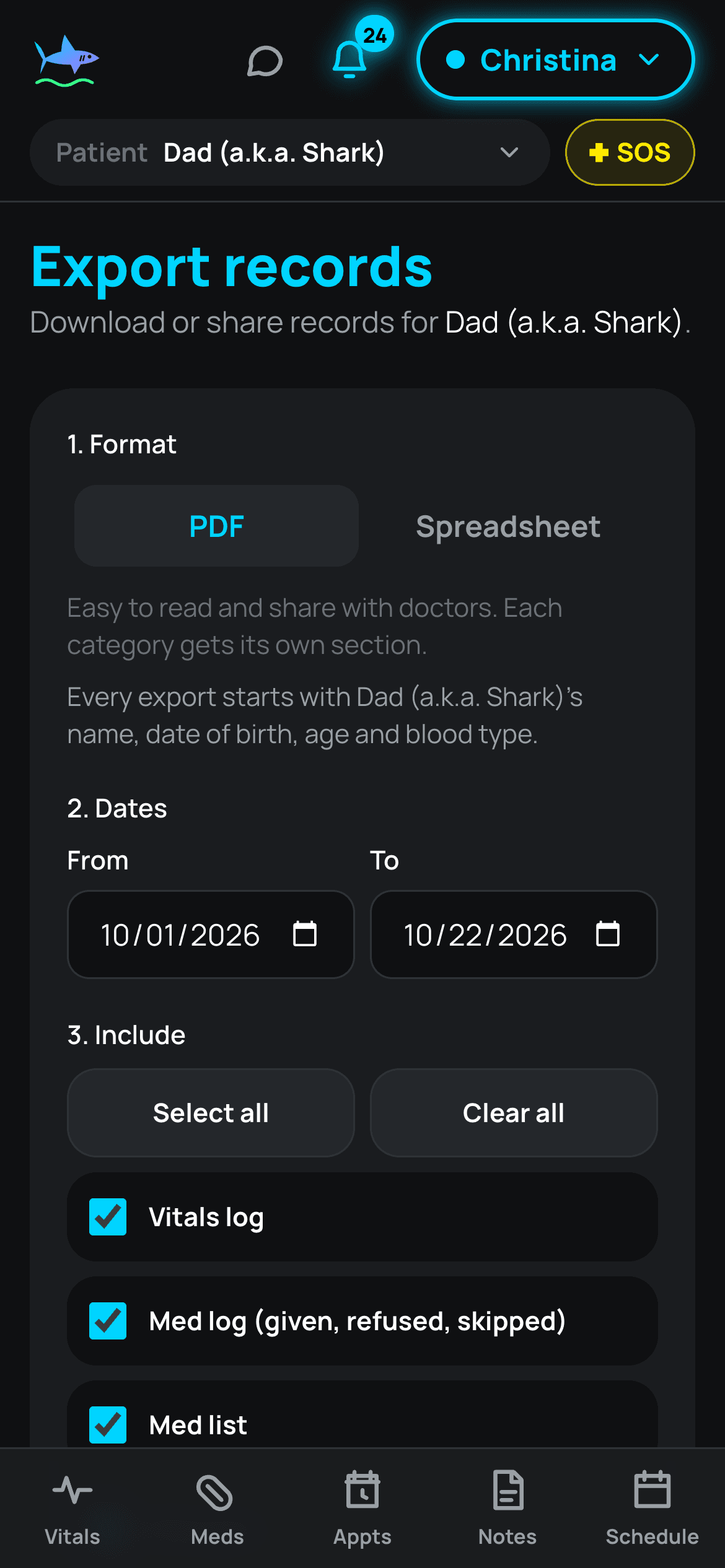
Shark Team can export the readings for the dates you choose as a PDF, with the patient's name at the top. It's much easier for a doctor to read than a stack of notes.
Never change or stop a blood pressure medicine on your own. Keep logging, and let the care team make the decisions. Medicines and a medication log go hand in hand with the readings.
Questions families ask
What should blood pressure be after a stroke?
That's for the doctor to decide. The right target depends on the person, the type of stroke and their other conditions. Ask the doctor for the range they want, and when to call.
How often should we check blood pressure at home after a stroke?
Follow the doctor's plan. The American Heart Association suggests measuring at the same time each day and taking two readings one minute apart. Many doctors ask for morning and evening readings.
Is a wrist blood pressure monitor OK?
The American Heart Association recommends an automatic monitor with a cuff on the upper arm. It says wrist and finger monitors give less reliable readings. Choose a validated monitor with the right cuff size.
When is a blood pressure reading an emergency?
The American Heart Association says a reading higher than 180 on top and/or higher than 120 on the bottom with symptoms like chest pain, shortness of breath, numbness, weakness, vision changes or trouble speaking means call 911.
Sources
- American Stroke Association: High Blood Pressure and Stroke: blood pressure as the leading risk factor for stroke, and the categories
- American Heart Association: Home Blood Pressure Monitoring: choosing a monitor and taking accurate readings
- CDC: Stroke Facts: repeat strokes and leading causes of stroke
- CDC: About High Blood Pressure: high blood pressure and stroke risk
- NIH (NINDS): Know Stroke: preventing stroke
This is general information, not medical advice. Every stroke and every recovery is different. Talk to the doctor, nurse or therapist about your situation, and call 911 in an emergency.