FALL PREVENTION
Preventing falls at home after a stroke
By TZ Alwan, founder of Shark Team · Published · Last updated
Falls are one of the most common problems after a stroke, and one fall can set recovery back for weeks. The good news is that many falls can be prevented with small changes to the house and the daily routine. Here's a practical, room-by-room plan, based on guidance from the American Stroke Association, the CDC and NIH.
Think someone is having a stroke right now? Call 911. Don't drive them to the hospital yourself.
Why falls are common after a stroke
The American Stroke Association reports that falls affect between 36% and 73% of people in the first six months after they leave the hospital. It points to a mix of causes:
- Weakness on one side of the body, or a foot that drags.
- Balance and coordination problems.
- Vision changes, or not noticing things on one side.
- Medicines that cause dizziness or sleepiness.
- Changes in thinking that lead to rushing, or skipping the walker “just this once.”
Falls aren't a normal part of recovery, and the American Stroke Association recommends looking into the cause of every one. Fear of falling can also make someone move less, which makes them weaker. That's why prevention matters so much.
Room-by-room home safety checklist
Everywhere
- Clear walkways of clutter, cords and loose rugs.
- Make sure every room is well lit, and add night lights along the way to the bathroom.
- Put things they use every day within easy reach, so nobody needs a step stool.
- Make sure stair treads and handrails are firmly attached. Rails on both sides help.
Bathroom
- Grab bars by the toilet and in the shower or tub (not towel bars, which aren't made to hold weight).
- Non-slip strips or a mat in the tub or shower.
- A shower chair or tub bench and a hand-held shower head, if the therapist suggests them.
- A raised toilet seat if getting up is hard.
Bedroom
- A bed at a height where feet rest flat on the floor when sitting on the edge.
- A lamp or touch light that's easy to reach from bed.
- A clear path to the bathroom, and a commode at night if the care team recommends one.
Kitchen and living room
- Sturdy chairs with arms, so it's easier to stand up.
- Wipe up spills right away.
- Keep pets' bowls and toys out of the walking path.
The American Stroke Association's preventing falls page has printable checklists for the home and the bathroom, plus tips for caregivers.
Shoes, walking aids and getting up
- Shoes: supportive, non-slip, low-heeled shoes, even for a short walk. NIH advises against walking on stairs or floors in socks or smooth-soled slippers.
- Walking aids: use the cane, walker or brace exactly as the physical therapist showed you, every time.
- Standing up: sit on the edge of the bed for a moment before standing, especially at night or after a nap.
- Help: ask the therapist how much hands-on help to give, and how to help without both of you falling.
Medicines, vision and night-time
- Ask the doctor or pharmacist to review all medicines at each visit, including over-the-counter ones and supplements.
- Write down dizziness and when it happens. It may be linked to a medicine or to blood pressure. Our guide to blood pressure after a stroke explains how to log it.
- Get vision checked regularly, and keep glasses clean and within reach.
- Plan bathroom trips before bed, and keep the path lit. NIH notes that rushing to the bathroom can make a fall more likely.
What to do after a fall
- Stay calm and check for injuries before trying to get up.
- Call 911 if they're badly hurt, can't get up, hit their head, or show any BE FAST stroke sign.
- Get them up only if they aren't hurt and you know how. Ask the physical therapist to teach you the safe way.
- Write down what happened: the time, where, what they were doing and any injury.
- Tell the doctor. The American Stroke Association suggests seeing the doctor or physical therapist after repeated minor falls.
Make safety part of the routine
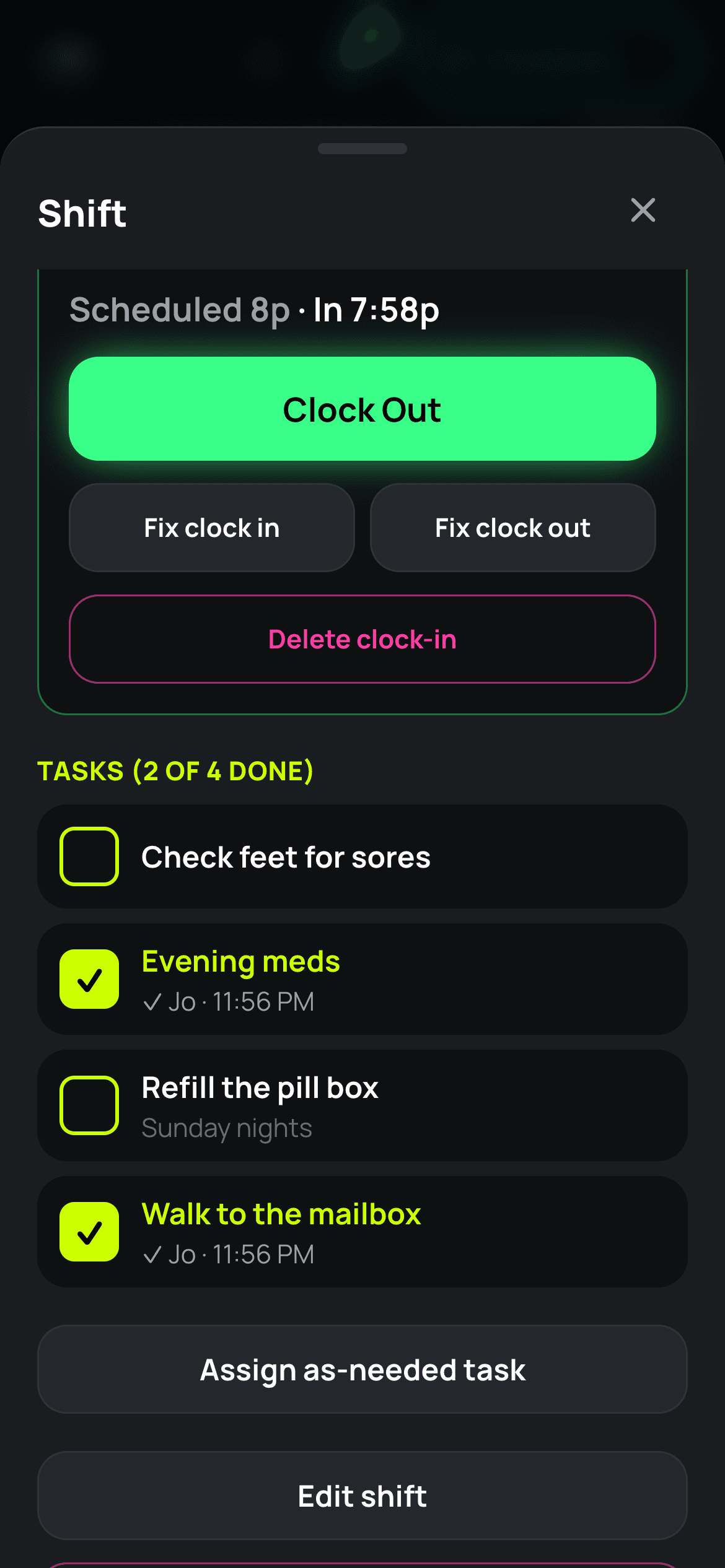
Checklists only help if someone actually does them. In Shark Team, care tasks let you add safety jobs to every caregiver shift, like “Night lights on” or “Check the bathroom mat,” and see who checked each one off. Shift handoffs on the caregiver schedule let the next person know about a near-fall, and a note can record a fall with the time and details for the doctor.
Questions families ask
Why are falls so common after a stroke?
The American Stroke Association lists balance changes, muscle weakness, vision problems and medications. Changes in thinking can also lead to unsafe choices, like skipping the walker for a quick trip.
What should we do after a fall?
If someone is badly hurt, can't get up, hit their head or shows any stroke warning sign, call 911. The American Stroke Association says to go to the emergency room for severe pain, bruising or bleeding, and to see the doctor or physical therapist after repeated minor falls.
Do we need grab bars and a shower chair?
Many families find them helpful, but ask the physical or occupational therapist. They can suggest the right equipment for this person and show everyone how to use it safely.
Can medicines make falls more likely?
Some can, for example if they cause dizziness or sleepiness. Never stop a medicine on your own: ask the doctor or pharmacist to review the list at each visit.
Sources
- American Stroke Association: Preventing Falls: why falls happen after a stroke, with home safety checklists
- American Stroke Association: Restoring Your Balance: footwear, home hazards, medications and vision
- American Stroke Association: Stroke Rehab: how common falls are in the first six months
- CDC: Older Adult Fall Prevention: falls can be prevented
- NIH (National Institute on Aging): Falls and Fractures: shoes, medicines and home safety
This is general information, not medical advice. Every stroke and every recovery is different. Talk to the doctor, nurse or therapist about your situation, and call 911 in an emergency.