STROKE REHAB
Stroke rehab: what physical, occupational and speech therapy do
By TZ Alwan, founder of Shark Team · Published · Last updated
After a stroke, therapy can fill the calendar: physical therapy on Monday, speech on Tuesday, occupational therapy on Thursday. Knowing what each therapist works on makes the visits easier to follow, helps you practice the right things at home, and makes it easier to see progress. Here's a plain-English guide, from a family that has sat through a lot of therapy visits since 2018.
Think someone is having a stroke right now? Call 911. Don't drive them to the hospital yourself.
What stroke rehab is for
The American Stroke Association describes the goal of stroke rehabilitation as helping survivors regain skills, become more independent and get back to daily activities as much as possible. Every stroke is different, so every rehab plan is different too.
It says rehab should start in the hospital as soon as possible, and that more than two-thirds of stroke survivors in the U.S. receive rehab services after their hospital stay. The best results come from the survivor, the family and the care team working together.
Physical therapy (PT): moving safely
A physical therapist usually works on:
- Walking, with or without a cane or walker.
- Balance and coordination, to help prevent falls.
- Strength and range of motion, especially on a weaker side.
- Getting in and out of bed, a chair, the car or the shower.
- An exercise plan to keep practicing at home.
Ask the physical therapist how much help the survivor needs when walking at home, and which devices to use. Our guide to fall prevention after a stroke covers making the house safer.
Occupational therapy (OT): everyday tasks
An occupational therapist focuses on the tasks of daily life:
- Dressing, bathing, grooming and using the toilet.
- Eating, cooking and simple chores.
- Using the hands and arms, including fine movements like buttons and writing.
- Tools that make tasks easier, like a shower chair, grab bars or a long-handled sponge.
- Ways to manage memory or attention changes during the day.
Occupational therapists often suggest changes around the house. Write them down, and decide as a family who will make each one.
Speech-language therapy: talking, understanding and swallowing
A speech-language pathologist (often called a speech therapist) can help with:
- Aphasia: trouble finding words, speaking, understanding, reading or writing. See our aphasia communication tips.
- Slurred or weak speech when the muscles used for talking are affected.
- Swallowing: the American Stroke Association explains that a speech-language pathologist checks how safely someone can swallow, and what food and drink textures are safest.
- Thinking skills like memory, attention and problem solving.
Where rehab happens
Rehab can take place in several settings, sometimes one after another:
- An inpatient rehab unit or facility, with several hours of therapy a day.
- A skilled nursing facility, with therapy at a slower pace.
- At home, with therapists who visit.
- An outpatient clinic, with visits a few times a week.
The hospital's case manager or social worker can explain the options and what insurance covers. Ask early, because decisions often need to be made quickly.
Keeping track of therapy appointments
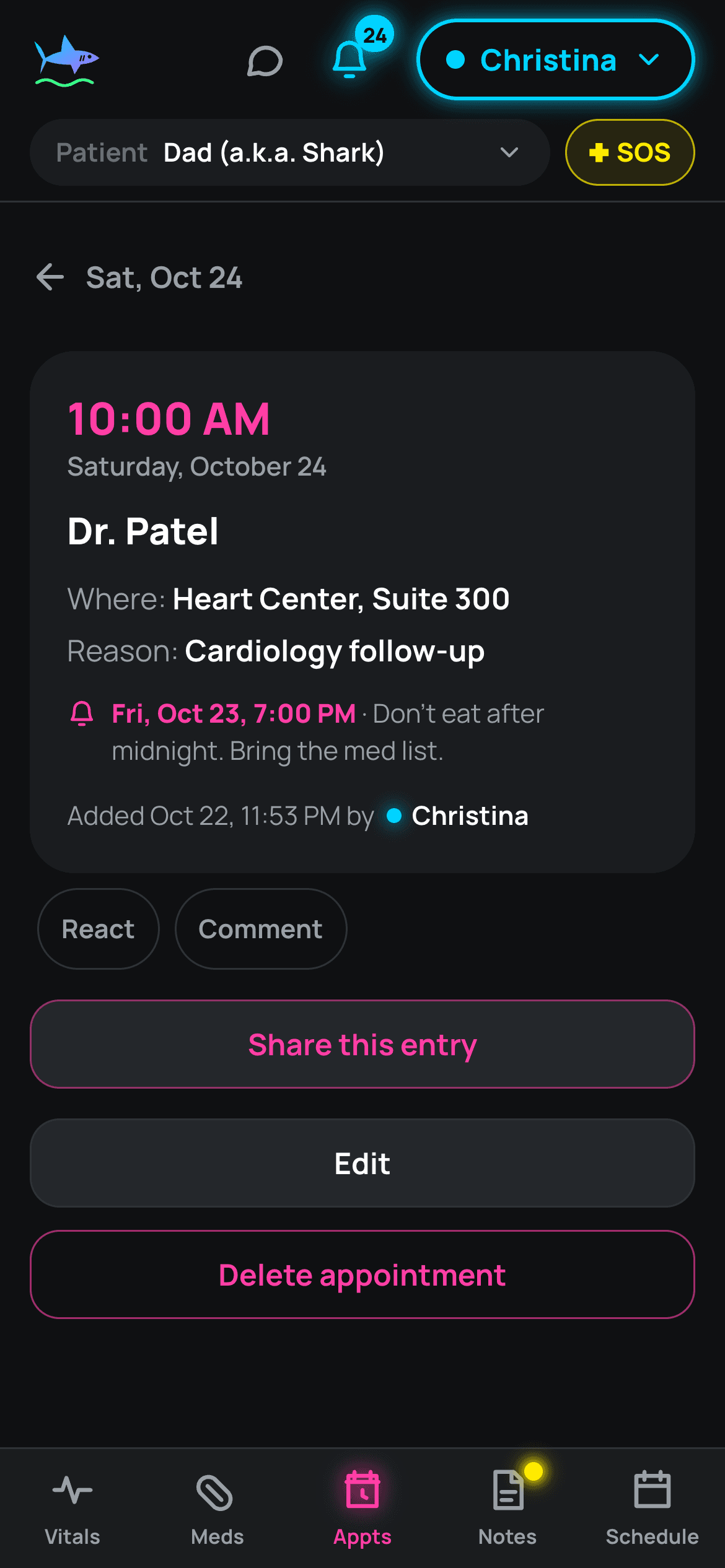
With several therapists plus doctor follow-ups, it's easy to lose track. Put every visit on one calendar with the address, the time and who's driving. In Shark Team, appointment reminders go out the day before and 2 hours before, and you can add your own reminder like “Bring the walker” or “Wear sneakers.”
How to track progress at home
The American Stroke Association notes that the fastest recovery usually happens in the first three to four months, but that some survivors keep improving well into the first and second year. Progress can be slow enough that it's hard to see day to day. Writing it down helps:
- After each visit, write what the therapist worked on and the home exercises they gave.
- Track simple measures the therapist suggests, like how far they walked or how long they could stand.
- Note milestones: the first walk to the mailbox, buttoning a shirt, a full sentence on the phone.
- Write down setbacks too, like a fall or a bad week, and share them at the next visit.
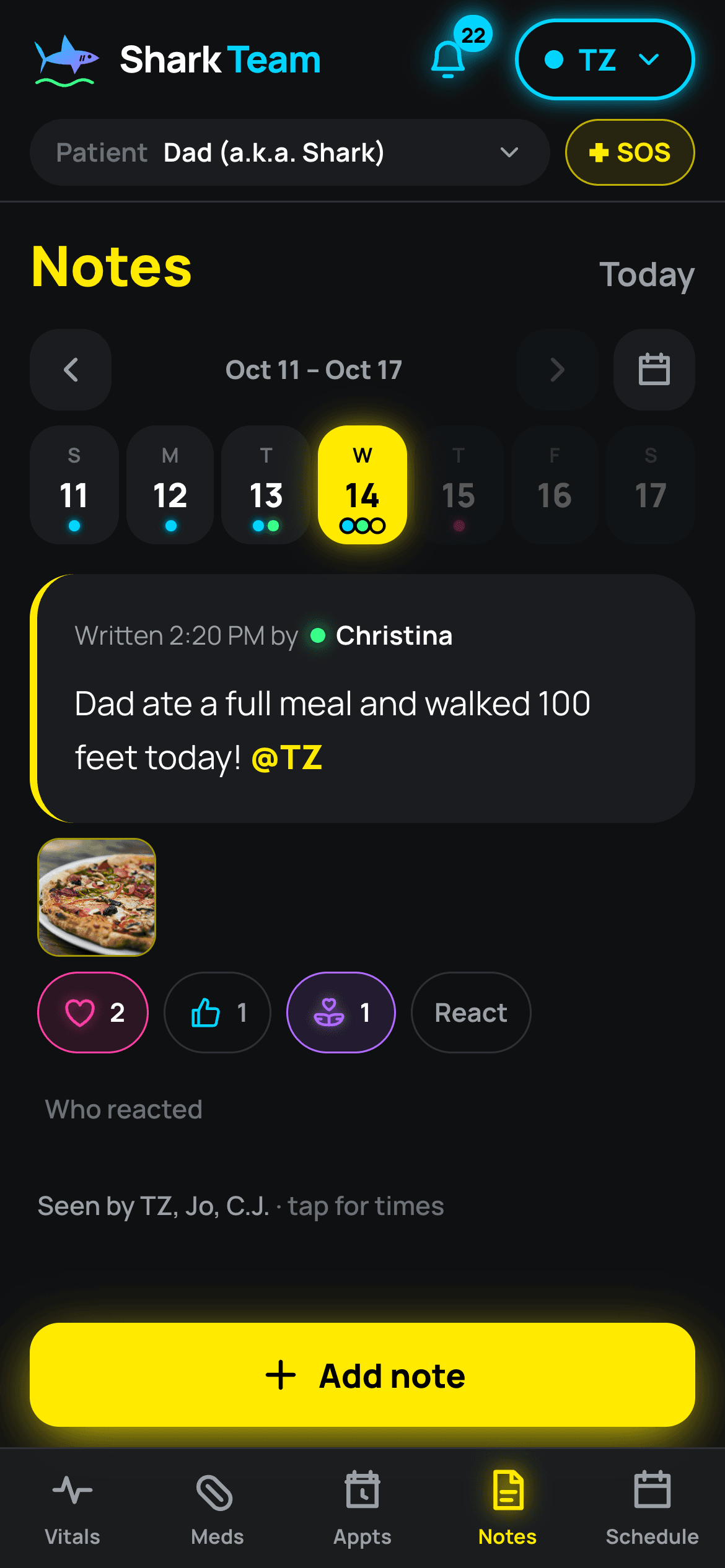
In Shark Team, anyone on the team can post a note with a photo or video, so a sibling across the country sees the milestone the same day. You can also add your own things to track in the vitals tracker, like minutes of walking practice.
Questions to ask the therapy team
- What are the goals for the next few weeks?
- What should we practice at home, and how often?
- How much help should we give, and when should we step back?
- Which equipment do we need, and where do we get it?
- What signs mean we should call you or the doctor?
Bringing a written list helps, and so does a good handoff between family members. Our guide to caring for someone at home after a stroke covers sharing the work.
Questions families ask
When does stroke rehab start?
The American Stroke Association says rehabilitation should start in the hospital as soon as possible after the stroke. It often continues in a rehab facility, at home or at an outpatient clinic.
How long does stroke rehab last?
It depends on the person. The American Stroke Association notes that improvements can continue for months or years, even after formal rehab ends. The therapists will set goals and review them over time.
What's the difference between physical and occupational therapy?
In general, physical therapy works on moving: walking, balance, strength and getting in and out of bed or a chair. Occupational therapy works on daily tasks like dressing, bathing, cooking and using the hands.
Does speech therapy only help with talking?
No. A speech-language pathologist can also help with understanding, reading, writing, thinking skills and swallowing problems after a stroke.
Sources
- American Stroke Association: Stroke Rehab: what rehab is for, when it starts and how long recovery goes on
- American Stroke Association: 15 Things Caregivers Should Know: recovery timing, therapy and measuring progress
- American Stroke Association: Trouble Swallowing After Stroke: swallowing checks by a speech-language pathologist
- CDC: Treatment and Intervention for Stroke: hospital care, preventing another stroke and rehabilitation
- NIH (NINDS): Know Stroke: stroke and recovery
This is general information, not medical advice. Every stroke and every recovery is different. Talk to the doctor, nurse or therapist about your situation, and call 911 in an emergency.