STROKE WARNING SIGNS
Signs of a stroke: BE FAST, and when to call 911
By TZ Alwan, founder of Shark Team · Published · Last updated
A stroke is a medical emergency, and minutes matter. The faster someone gets to a hospital, the more treatment options they have. BE FAST is a simple way to remember the warning signs, so anyone in the family, including kids and visiting relatives, can spot a stroke and act.
Think someone is having a stroke right now? Call 911. Don't drive them to the hospital yourself.
Free printable: BE FAST fridge sign (PDF)Print it and put it on the fridge, so everyone in the house knows the signs.The BE FAST warning signs of a stroke
The American Stroke Association and the CDC both teach B.E. F.A.S.T. to spot a stroke. Each letter is something you can check in a few seconds:
- B is for Balance. A sudden loss of balance or coordination. The person may be dizzy, stumbling or suddenly unable to walk.
- E is for Eyes. Sudden vision changes: blurred or double vision, or loss of sight in one or both eyes. Ask if they can see normally.
- F is for Face. One side of the face droops or feels numb. Ask them to smile. Is the smile uneven?
- A is for Arms. One arm is weak or numb. Ask them to raise both arms. Does one drift down?
- S is for Speech. Speech is slurred, strange or hard to understand. Ask them to repeat a simple sentence.
- T is for Time. Time to call 911, right away, even if you're not sure.
You may also see the shorter F.A.S.T. (Face, Arms, Speech, Time). BE FAST adds balance and eyes, because a stroke in some parts of the brain shows up first as dizziness or vision trouble rather than a drooping face.
Other sudden signs of a stroke
The CDC and the American Stroke Association also list these. The key word is sudden:
- Numbness or weakness in the face, arm or leg, especially on one side of the body.
- Confusion, trouble speaking or trouble understanding what others say.
- A severe headache with no known cause.
One sign is enough. Don't wait to see whether it gets better, and don't wait for someone else to agree it looks like a stroke.
When to call 911, and what to do while you wait
Call 911 if you see any of these signs, in yourself or someone else. Don't call the doctor's office first, and don't drive to the hospital. The CDC explains that an ambulance can start treatment on the way, and the crew can alert the hospital and may take the person to a stroke center.
While you wait for the ambulance:
- Note the time the signs first appeared, or the last time the person was seen acting normally. Doctors use this to decide on treatment. Say it to the 911 operator and the paramedics.
- Stay with the person and keep them safe from falling. Follow what the 911 operator tells you.
- Don't give them anything to eat or drink. A stroke can make swallowing unsafe.
- Unlock the door and turn on the porch light, so the crew can get in quickly.
- Grab their medication list, allergies and doctors' names, or have them ready on your phone.
Why minutes matter
NIH explains that most strokes are ischemic, meaning a clot cuts off blood to part of the brain. The rest are hemorrhagic, caused by bleeding in or around the brain. Either way, the longer the brain goes without normal blood flow, the more damage can happen.
The CDC notes that the treatments that work best are available only if the stroke is recognized and diagnosed within 3 hours of the first symptoms. In one CDC survey, only 38% of people knew all the major symptoms and knew to call 911. That's why it helps when everyone in the house knows BE FAST, not just the main caregiver.
If your family member has had a stroke before
According to the CDC, nearly 1 in 4 strokes happen in people who have had one before. If you're caring for a stroke survivor, a few things make an emergency go more smoothly:
- Know what's normal for them now. If their speech or walking is already affected, a sudden change from their usual is the warning sign.
- Put the BE FAST sign on the fridge, and walk visiting family and paid caregivers through it.
- Keep an up-to-date list of meds (especially blood thinners), allergies, conditions and doctors where anyone can find it.
- Make sure every caregiver knows the address and the best way into the house.
Watch for a TIA, too. If stroke signs come and go within minutes, the CDC calls it a transient ischemic attack (a “mini-stroke”). It still needs care right away, because it can be a warning that a stroke may follow.
Get the free BE FAST fridge sign
Our free printable BE FAST sign (linked at the top of this page) fits on one sheet of paper. It has the six letters, what to check for each one, and space to write the home address and the patient's name, so a babysitter or new caregiver can read it to the 911 operator.
Keep their information ready for the paramedics
In an emergency, paramedics will ask what medicines the person takes, what they're allergic to and which conditions they have. Shark Team's emergency medical card keeps that on one screen that opens in one tap, even with no signal. It pulls in the current med list from the medication tracker, so it stays up to date.
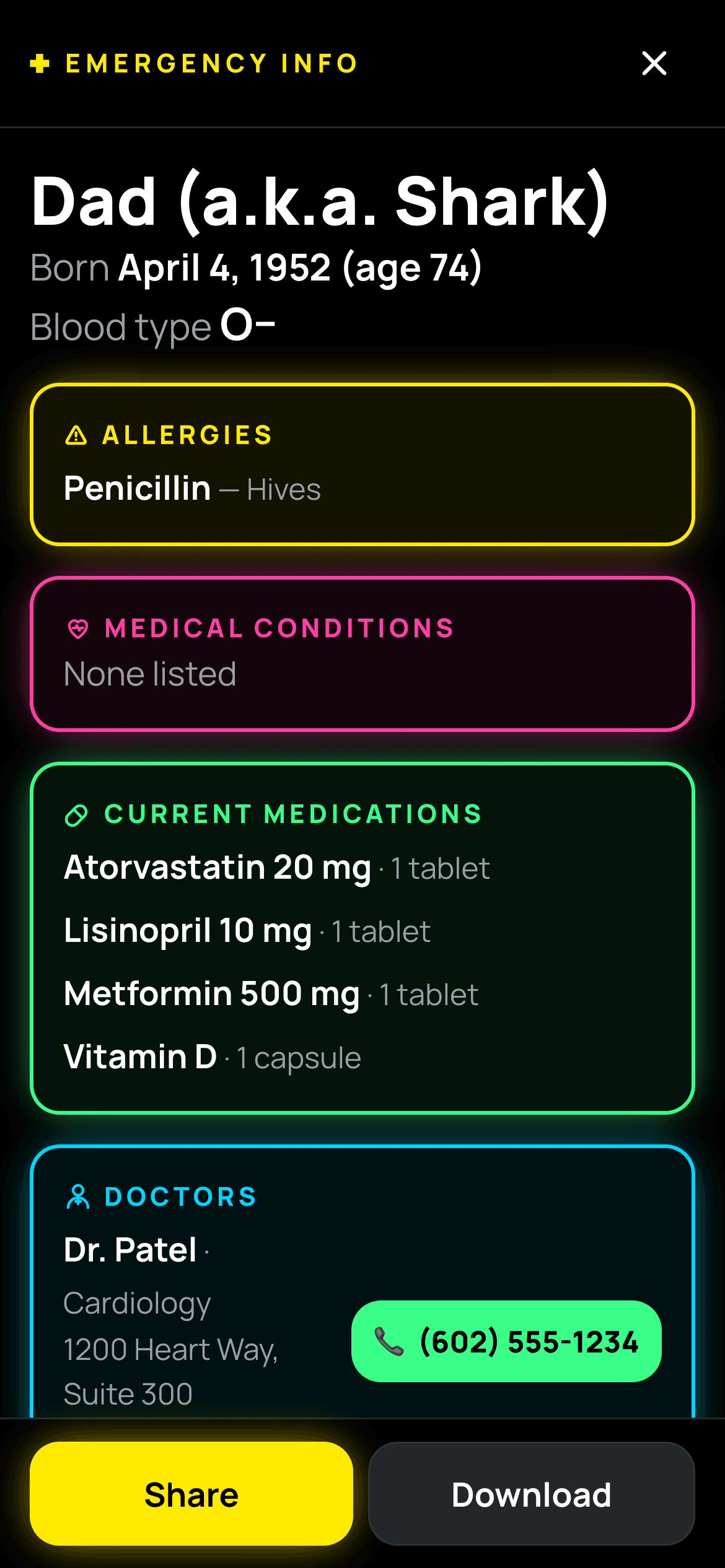
After the emergency, the next steps start: coming home, new medicines and therapy. Our guide to caring for someone at home after a stroke covers the first weeks.
Questions families ask
What does BE FAST stand for?
Balance, Eyes, Face, Arms, Speech and Time. The American Stroke Association and the CDC use B.E. F.A.S.T.: sudden loss of balance, sudden vision changes, a drooping face, arm weakness and slurred or strange speech mean it's time to call 911.
Should I drive someone to the hospital if I think it's a stroke?
No. The CDC says to call 911 for an ambulance instead of driving. Emergency workers can start care on the way and alert the hospital before you arrive.
What if the stroke signs go away after a few minutes?
Still get help right away. Signs that go away may be a transient ischemic attack (TIA), sometimes called a mini-stroke. The CDC says a TIA is a sign of a serious condition that needs medical care.
Can someone have a stroke without all the BE FAST signs?
Yes. One sign is enough to call 911. Other sudden signs include numbness on one side of the body, confusion, trouble understanding speech and a severe headache with no known cause.
Sources
- American Stroke Association: Stroke Symptoms: the B.E. F.A.S.T. warning signs and other sudden symptoms
- CDC: Signs and Symptoms of Stroke: B.E. F.A.S.T., calling 911, noting the time, and TIAs
- CDC: Treatment and Intervention for Stroke: why to call an ambulance instead of driving
- NIH (NINDS): Know Stroke: stroke as a medical emergency, and the two main types
This is general information, not medical advice. Every stroke and every recovery is different. Talk to the doctor, nurse or therapist about your situation, and call 911 in an emergency.