STROKE CARE AT HOME
Caring for a stroke patient at home
By TZ Alwan, founder of Shark Team · Published · Last updated
When our dad came home after his first stroke in 2018, we had a bag of new prescriptions, a stack of discharge papers and a calendar full of therapy visits. Nobody had told us how to turn all of that into a routine.
This guide is what we wish we'd had: how to get through the first weeks, build a daily routine, keep medicines and appointments straight, and share the work so one person doesn't carry all of it.
Think someone is having a stroke right now? Call 911. Don't drive them to the hospital yourself.
You're not alone in this
The American Stroke Association says more than 80% of stroke survivors in the U.S. live in the community, most of them at home. That means most stroke care happens in kitchens and living rooms, by spouses, adult children and paid caregivers, between the hospital visits. It's a lot, and it's normal to feel unprepared at first.
The first weeks home after a stroke
The first days set the pattern for everything after. A few things to do early:
- Gather everything in one place. Discharge papers, the medication list, therapy schedules and the doctors' phone numbers. Take photos of the papers so they can't get lost.
- Ask the care team what to watch. Which readings to take (often blood pressure), how often, and which numbers mean you should call.
- Look at the home with fresh eyes. Clear walkways, add night lights and ask whether grab bars or a shower chair would help. Our fall prevention guide has a room-by-room checklist.
- Set up the first follow-ups. The primary care doctor, the neurologist and any therapy, all on one calendar.
- Learn the warning signs. Survivors are at higher risk of another stroke. Everyone in the house should know the BE FAST signs.
Building a daily routine
A predictable day helps everyone. It helps the survivor know what's coming, and it helps helpers know what's done. Many families build it around medicines, meals and therapy exercises:
- Morning: blood pressure reading if the doctor asked for one, morning meds, breakfast, washing and dressing.
- Midday: therapy exercises or a visit, lunch, a rest. Fatigue is common after a stroke, so plan rest on purpose.
- Evening: evening meds, dinner, a short walk if the therapist says it's safe, and getting ready for bed with a clear path to the bathroom.
Write the routine down where everyone can see it, and adjust it as recovery changes. The American Stroke Association notes that recovery has no set end point: improvements can continue for months or years.
Keeping medications straight
After a stroke the med list often grows, and it can change at every visit. Missed or doubled doses are a real risk when several people help. What works:
- One master list with each medicine, the dose, the times and what it's for.
- A log of every dose given, with the time and who gave it.
- Refills ordered before the supply runs out.
- Never stopping or changing a medicine without the doctor or pharmacist.
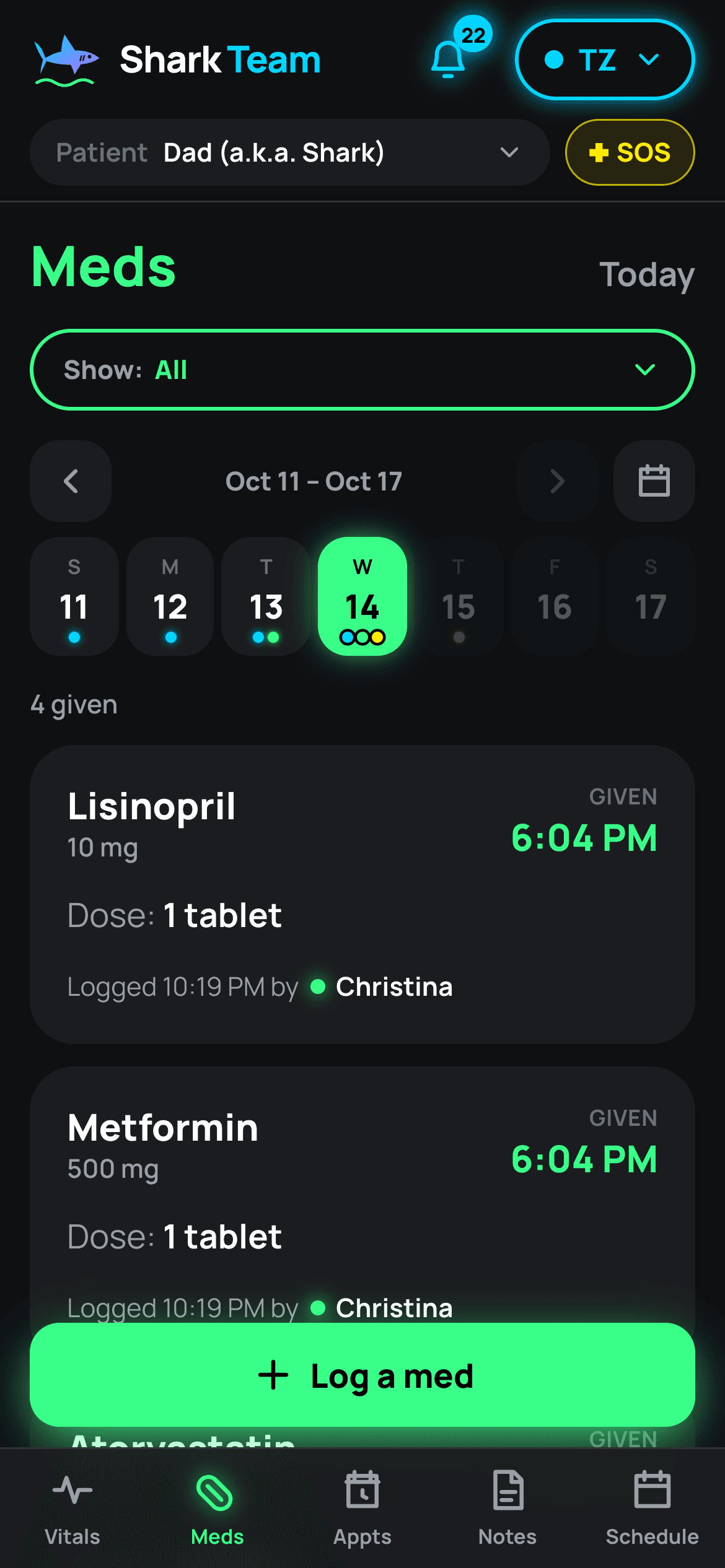
In the Shark Team medication tracker, each dose is logged as given, refused or skipped, with the time and the name of the person who gave it, and reminders go out at the times you set. Anyone on the team can see whether the evening meds were given.
Therapy and doctor appointments
Rehab can mean several visits a week, on top of doctor follow-ups. Put every appointment on one calendar, with the address and who is driving. After each visit, write down what was said and any new instructions, so the next person knows. Our guide to physical, occupational and speech therapy explains what each one does, and appointment reminders make sure nobody forgets the day before.
Who does what: sharing the work
Caregiving goes better when the jobs are split up and written down. Think about who handles medicines, who drives to appointments, who talks to insurance, who covers nights and weekends, and who checks in on the main caregiver. Family who live far away can still help with phone calls, bills and research.
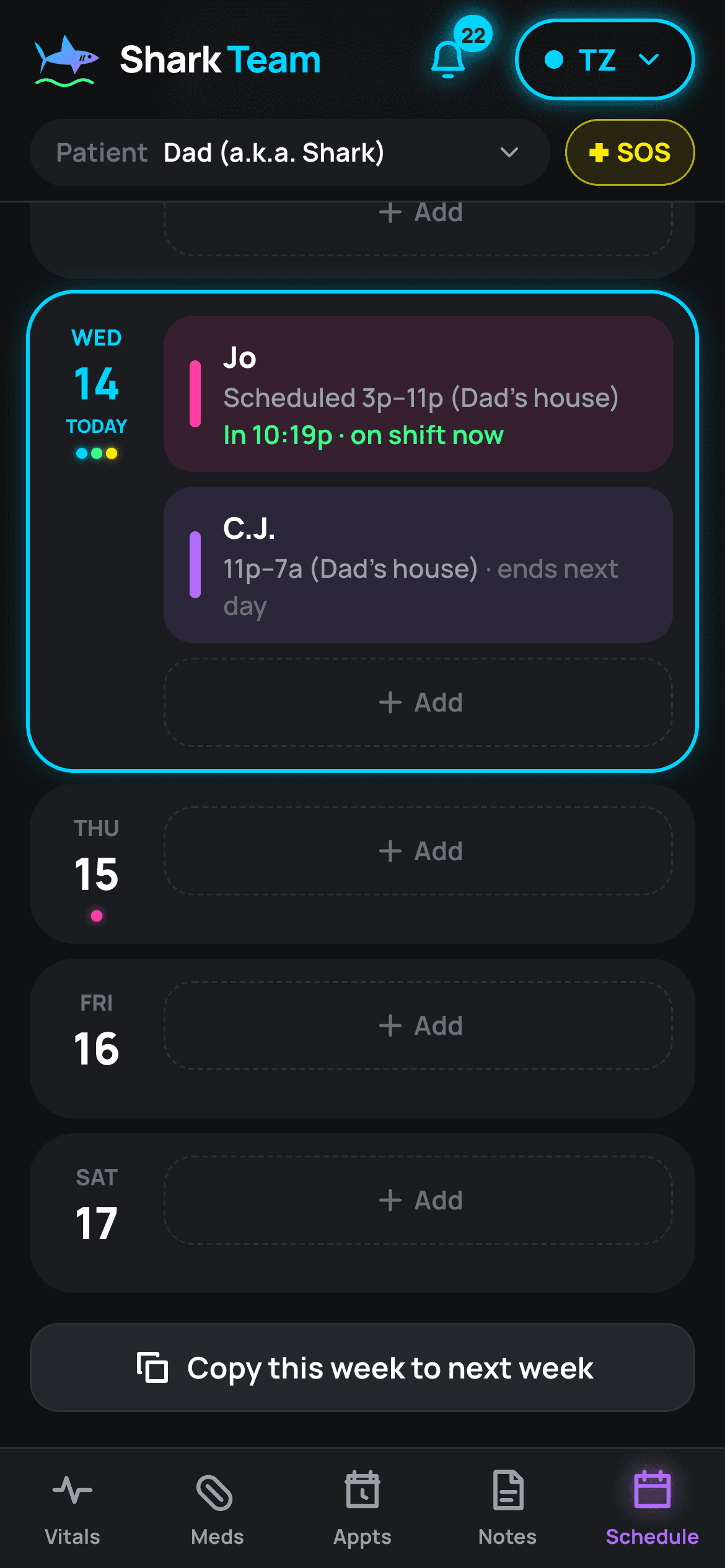
If paid caregivers help, give each shift a clear task list and ask for a short handoff at the end: how the day went, what was eaten, any falls or changes. The caregiver schedule keeps shifts, tasks and handoffs together, and family care coordination keeps updates and messages in one place instead of buried group texts.
Taking care of the caregiver
The main caregiver needs breaks, sleep and help, too. Mood changes are common after a stroke, for the survivor and the family. Our guide to caregiver burnout and support covers the signs and where to find help.
Questions families ask
How long does recovery take after a stroke?
Every stroke is different. The American Stroke Association says the fastest recovery usually happens in the first three to four months, and that improvements can continue for months or years. Ask the care team what to expect.
What should we ask before leaving the hospital or rehab?
Ask for a full medication list, which readings to take at home, which follow-up and therapy visits are needed, what changes in the home are suggested, and who to call with questions after hours.
Can paid caregivers and family share the same plan?
Yes. Write the routine down in one place everyone can see. In Shark Team, family and paid caregivers each get a role, and shifts come with task lists and handoff notes.
When should I call 911?
Call 911 for any sudden stroke warning sign (BE FAST: Balance, Eyes, Face, Arms, Speech, Time), and for any emergency. Call the doctor for questions that can't wait but aren't emergencies.
Sources
- American Stroke Association: Stroke Rehab: life at home after a stroke, and recovery over time
- American Stroke Association: 15 Things Caregivers Should Know: medications, falls, mood and recovery
- CDC: Steps for Creating and Maintaining a Care Plan: keeping care information in one place
- NIH (NINDS): Know Stroke: stroke, recovery and prevention
This is general information, not medical advice. Every stroke and every recovery is different. Talk to the doctor, nurse or therapist about your situation, and call 911 in an emergency.